

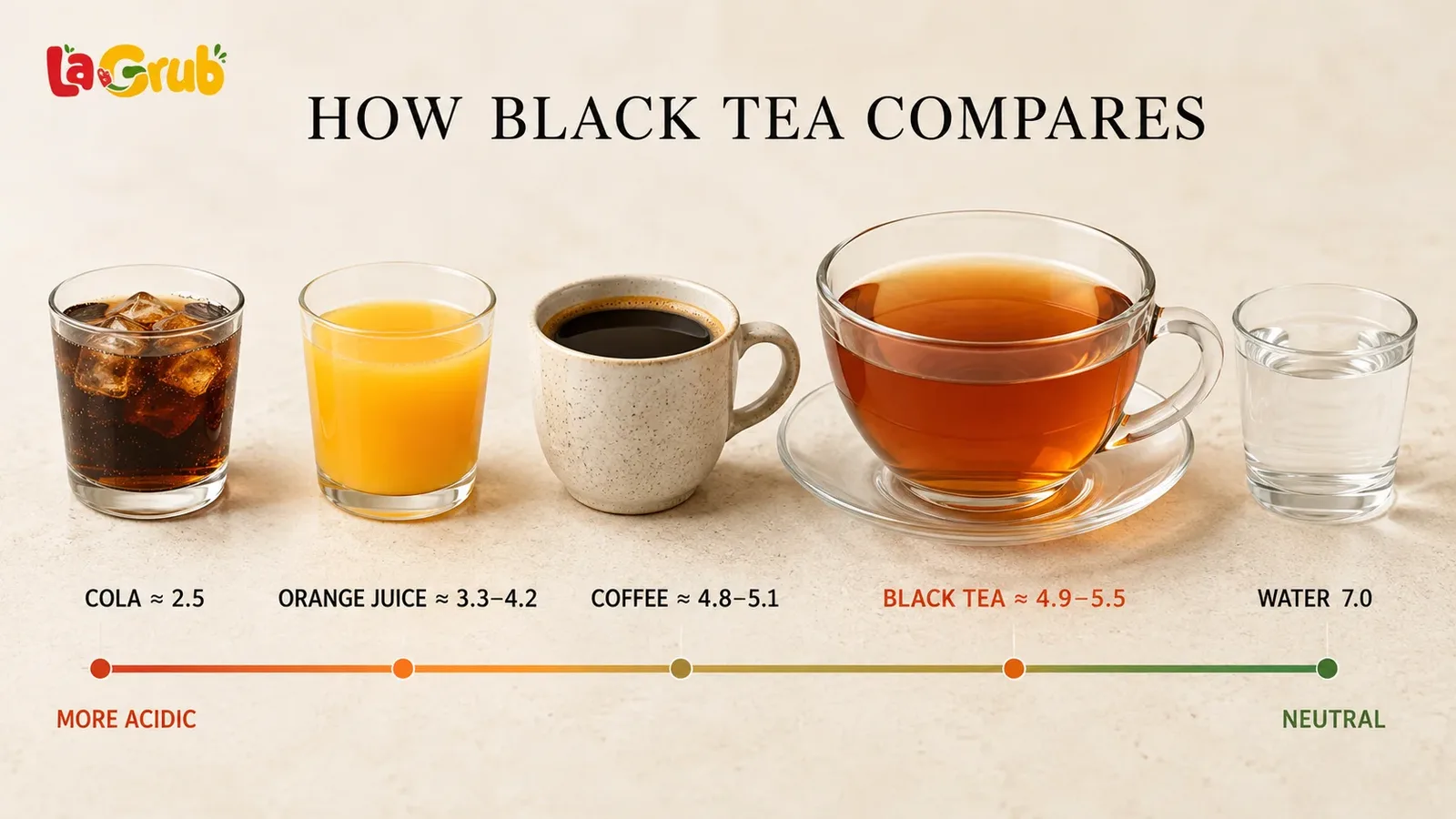
Black tea is mildly acidic, with a typical pH around 4.9 to 5.5. Black tea can feel sharper when you overbrew the leaves, add lemon, drink on an empty stomach, or react to caffeine and tannins.
Is Black Tea Acidic? pH, Reflux & Brewing Guide 2026
Black tea is mildly acidic, with a typical pH around 4.9 to 5.5. Black tea can feel harsher than the pH suggests because caffeine, tannins, long steeping, lemon, and empty-stomach drinking can trigger bitterness, dryness, or reflux symptoms in sensitive people.
The best answer to is black tea acidic starts with 2 facts. Black tea has acid, but black tea has low acid impact compared with citrus juice, soda, and many fruit teas.
Why Do People Ask Is Black Tea Acidic Before Brewing?
People ask is black tea acidic when a cup feels sour, bitter, dry, or rough. The question often starts after reflux, nausea, tooth sensitivity, or throat irritation.
The answer needs more than one number. Black tea acidity, tannins, caffeine, lemon, milk, and steeping time all shape comfort.
A better cup starts with diagnosis. Decide whether your tea tastes sour, bitter, tannic, too strong, or too sharp.
Ask is black tea acidic when lemon tea bothers you. Ask about tannins when plain black tea dries your mouth.
Ask about caffeine when black tea causes jitters, heartburn, or sleep trouble. Different problems need different fixes.
Is Black Tea Acidic in Simple Words?
Yes, black tea is acidic in simple pH terms. Black tea usually sits near pH 4.9 to 5.5, depending on leaves, water, brewing strength, and added ingredients.
People ask is black tea acidic because black tea can taste sharp, bitter, or drying. That feeling often comes from tannins and caffeine, not only acid.
Black tea comes from Camellia sinensis leaves. The leaves contain polyphenols, caffeine, theaflavins, thearubigins, and tannins.
Those compounds create color, body, aroma, and a dry mouthfeel. A strong cup can feel rough when you steep black tea too long.
Use a gentler method when black tea feels uncomfortable. Brew lighter, skip lemon, and drink black tea with food.
What Is the pH of Black Tea?
is black tea acidic
The pH of black tea usually falls near 4.9 to 5.5. That range makes black tea mildly acidic, not strongly acidic.
The question is black tea acidic needs context because pH does not explain the whole cup. Steeping time, water minerals, milk, lemon, and tea type change the final drink.
A plain 8 oz (240 ml) cup of black tea will not behave like an 8 oz (240 ml) glass of orange juice.
Read the pH Scale Correctly
The pH scale runs from 0 to 14. A drink below 7 counts as acidic, and a drink above 7 counts as alkaline.
Black tea falls below 7, so black tea counts as acidic. Strong acidity starts lower on the scale, especially near pH 3.
Lemon juice, cola, orange juice, and many sour fruit drinks usually taste sharper because those drinks carry stronger acids.
Compare Black Tea With Common Drinks
Black tea usually tastes less acidic than citrus drinks such as orange juice, lemonade, grapefruit juice, and lemon tea.
Coffee often feels harsher because coffee contains more caffeine per 8 oz (240 ml) serving and roasted flavor compounds.
Milk tea can taste smoother because milk adds fat, protein, and sweetness. Milk does not make every stomach happier.
Why Does Black Tea Feel Acidic?

is black tea acidic
Black tea feels acidic because tannins, caffeine, overbrewing, lemon, and empty-stomach drinking create harshness. That explains why is black tea acidic feels personal.
One person can enjoy English breakfast tea daily. Another person can feel heartburn after the same 8 oz (240 ml) cup.
Your brewing method matters as much as the tea leaf. A rough cup usually comes from time, temperature, and strength.
Tannins Create Dryness
Tannins create astringency. Astringency gives black tea a dry, puckering feeling on your tongue and gums.
Oversteeped tea releases more tannins. Tea bags release tannins quickly because small leaf particles brew faster than whole leaves.
Reduce tannins by steeping black tea for 2 to 3 minutes. Use loose leaves when tea bags taste harsh.
Caffeine Can Trigger Reflux Symptoms
Caffeine can trigger heartburn in sensitive people. Black tea contains less caffeine than many coffees, but caffeine still matters.
Gastroesophageal reflux disease [GERD] symptoms vary by person. Some people react to coffee, tea, chocolate, soda, or spicy food.
Choose decaf black tea when regular black tea triggers burning, throat irritation, or sour burps.
Lemon and Long Steeping Add Sharpness
Lemon makes black tea more acidic. Lemon also brightens flavor, so many drinkers enjoy lemon tea without discomfort.
Skip lemon when black tea already feels sharp. Add milk, honey, or a small amount of sugar when sweetness suits your cup.
Stop steeping before bitterness builds. A 5-minute steep tastes stronger, but a 5-minute steep also tastes harsher.
Is Black Tea Acidic Compared With Coffee and Juice?
Black tea is usually less acidic than citrus juice and many soft drinks. Black tea also often feels gentler than coffee for some drinkers.
People ask is black tea acidic compared with coffee because coffee often triggers stomach discomfort. Tea can still trigger symptoms in sensitive drinkers.
Use the comparison below for home decisions, not medical diagnosis.
| Drink | Typical Feel | Best Use | Watch Point |
|---|---|---|---|
| Plain black tea | Mildly acidic | Daily cup after food | Tannins and caffeine |
| Black tea with lemon | Sharper and brighter | Flavorful iced tea | Added citrus acid |
| Coffee | Stronger and roasted | Higher-caffeine drink | More caffeine per cup |
| Orange juice | Clearly sour | Fruit drink with breakfast | Citrus acidity |
| Rooibos tea | Soft and low-caffeine | Evening drink | Flavor preference |
Drink black tea after breakfast when black tea bothers an empty stomach. Choose water when reflux symptoms feel active.
Use is black tea acidic as a starting question, not the final answer. Your response after a cup gives the most useful clue.
Try plain black tea before lemon tea. Try lighter black tea before strong breakfast blends.
Can Black Tea Trigger Acid Reflux?
Yes, black tea can trigger acid reflux in some people. Black tea triggers usually come from caffeine, tannins, strong brewing, or timing.
The question is black tea acidic matters for reflux, but acid content does not explain every symptom. Your stomach response decides tolerance.
Ask a licensed clinician if heartburn happens often, swallowing becomes difficult, or chest pain appears.
Drink Black Tea With Food
Drink black tea with food to reduce stomach harshness. A small snack can soften the effect of tannins and caffeine.
Try toast, crackers, oatmeal, banana, yogurt, or eggs. These foods give your stomach something to handle with tea.
Avoid black tea before breakfast when morning tea causes nausea, burning, or sour taste.
Choose Decaf Black Tea When Caffeine Triggers Symptoms
Choose decaf black tea when caffeine causes jitters, reflux, sleep trouble, or a racing heartbeat.
Decaf black tea still contains tea compounds and flavor. Decaf black tea usually tastes lighter than regular black tea.
Use 1 decaf tea bag or 1 teaspoon (2 g) decaf loose tea for 8 oz (240 ml) water.
Track Personal Triggers Clearly
Track tea strength, time, food, and symptoms for 7 days. A simple note can show patterns quickly.
Write down tea type, cup size, steep time, milk, lemon, sugar, and symptom timing. Clear notes beat guessing.
Reduce black tea first when symptoms follow strong tea repeatedly. Reduce coffee, soda, chocolate, or citrus when those drinks cause symptoms.
How to Make Black Tea Less Acidic

is black tea acidic
To make black tea less acidic, brew black tea lighter, skip lemon, avoid oversteeping, and add milk when milk suits you.
People ask how to make black tea less acidic because the cup tastes harsh. The fix usually targets tannins and strength.
The question is black tea acidic becomes easier after you control brewing. A gentler method removes many false acid problems.
Use this quick method for a smoother 8 oz (240 ml) cup.
| Task | Timing | Method | Difficulty |
|---|---|---|---|
| Heat water | 2 to 4 minutes | Bring water to 195°F to 205°F (90°C to 96°C) | Easy |
| Add tea | 10 seconds | Use 1 teaspoon (2 g) loose black tea or 1 tea bag | Easy |
| Steep gently | 2 to 3 minutes | Cover the cup and avoid squeezing the tea bag | Easy |
| Soften flavor | 10 seconds | Add 1 to 2 tablespoons (15 to 30 ml) milk | Easy |
| Check comfort | 5 minutes | Drink after food and note reflux symptoms | Easy |
Brew With Slightly Cooler Water
Brew black tea with water near 195°F to 205°F (90°C to 96°C). Boiling water can pull bitterness faster.
Let a full kettle rest for 30 seconds before pouring. That small pause helps sensitive leaves taste smoother.
Use filtered water when tap water tastes metallic. Better water can improve tea without adding ingredients.
Shorten the Steeping Time
Steep black tea for 2 to 3 minutes when black tea feels acidic. Longer steeping increases body and harshness.
Remove tea leaves completely after steeping. Loose leaves sitting in the cup keep releasing tannins.
Avoid squeezing tea bags. Squeezing a tea bag forces bitter compounds into the cup.
Add Milk When Milk Suits You
Add milk to soften bitterness and tannins. Use 1 to 2 tablespoons (15 to 30 ml) milk for 8 oz (240 ml) tea.
Try dairy milk, oat milk, or soy milk. Choose unsweetened versions when sugar bothers digestion.
Skip milk when milk causes bloating, nausea, or reflux. A smoother tea leaf works better for those drinkers.
What Black Teas Taste Smoother?
Smoother black teas taste less sharp because leaf quality, origin, cut size, and brewing style affect tannins.
Readers who ask is black tea acidic often enjoy tea again after switching from dusty bags to better leaves.
People who ask is black tea acidic often need a softer black tea, not a totally different drink.
Try 3 smoother directions first: lighter leaf teas, whole-leaf blends, and shorter brewing.
Choose Lighter Black Teas
Choose Darjeeling, Yunnan, Keemun, or lighter Ceylon teas for a softer profile. These teas can taste floral, honeyed, or gentle.
Choose Assam, English breakfast, or Irish breakfast when you want strength. Strong blends can taste brisk and tannic.
Use milk with bold teas when you enjoy milk tea. Strong teas often handle milk better than delicate teas.
Avoid Overstrong Tea Bags
Tea bags brew quickly because small leaf pieces expose more surface area. That speed can create bitterness.
Use 1 tea bag for 8 oz (240 ml) water. Use 2 tea bags only when you add 4 oz (120 ml) milk.
Switch to loose leaf tea when tea bags always taste dusty, harsh, or flat.
What Tea Should Sensitive Stomachs Try Instead?
Sensitive stomachs can try lower-caffeine or caffeine-free drinks. Rooibos, chamomile, ginger, and some white teas often taste gentle.
Choose rooibos for a naturally caffeine-free cup. Choose chamomile for a soft floral drink.
Choose ginger tea when ginger suits your stomach. Avoid ginger when ginger creates burning for you.
Avoid peppermint when reflux worsens after mint. Avoid hibiscus, citrus blends, and lemon tea when sour drinks trigger discomfort.
Try 4 oz (120 ml) first when testing a new tea. Small servings give you feedback without wasting a full mug.
Ask is black tea acidic again after testing alternatives. Comparing black tea with rooibos, chamomile, and white tea can show your comfort range.
How to Serve Black Tea Without Harshness
Serve black tea after food, with controlled brewing, and without sharp add-ins. That makes black tea easier to enjoy.
Use the Masala Chai recipe when you want milk, spice, and warmth in one cup.
Use the better chai guide when weak or bitter tea needs better balance.
Read Desi cooking methods when you want to understand simmering, spice layering, and drink pairing.
Pair black tea with plain biscuits, toast, buttered bread, oat cookies, fruit, or lightly salted snacks.
Avoid pairing strong black tea with citrus desserts when acidity bothers your stomach.
Is Black Tea Acidic for Teeth?
Black tea is acidic for teeth by pH, but plain black tea has low acid impact compared with many sour drinks.
Dental comfort still depends on frequency, sipping time, lemon, sugar, and oral hygiene. Long sipping keeps teeth exposed longer.
Drink plain black tea within 20 minutes when teeth feel sensitive. Rinse with water after lemon tea or sweet tea.
Use is black tea acidic for teeth as a practical question. Plain black tea differs from lemon tea, peach tea, hibiscus tea, and bottled iced tea.
Ask a dentist about ongoing enamel sensitivity, gum pain, or tooth erosion. Dental advice should match your mouth, diet, and habits.
FAQs About Black Tea Acidity
Is black tea acidic or alkaline?
Yes. Black tea is acidic, not alkaline, because black tea usually has a pH below 7.
Is black tea bad for acid reflux?
No, black tea is not bad for everyone. Black tea can trigger reflux in sensitive people, mainly due to caffeine and tannins.
Does milk reduce black tea acidity?
Yes. Milk softens black tea flavor and reduces harshness for many drinkers, but milk does not suit every stomach.
Does lemon make black tea more acidic?
Yes. Lemon makes black tea more acidic because lemon adds citric acid to the cup.
Is decaf black tea less acidic?
No. Decaf black tea is still mildly acidic, but decaf black tea can feel gentler because caffeine drops.
Final Takeaway: Is Black Tea Acidic Enough to Avoid?
Black tea is mildly acidic, but most drinkers do not need to avoid black tea for acidity alone. Strong brewing, caffeine, tannins, lemon, and empty-stomach drinking cause many complaints.
Adjust your cup before quitting black tea. Steep for 2 to 3 minutes, use 195°F to 205°F (90°C to 96°C) water, skip lemon, and add milk when milk suits you.
Ask is black tea acidic after changing one brewing factor at a time. The question is black tea acidic becomes useful when you test strength, lemon, milk, and timing separately.
Start with LaGrub's Masala Chai recipe when you want a smoother milk tea with warm spices and balanced flavor.

Sahar Syed
Sahar Syed writes practical food and drink guides for home cooks who want clear, reliable kitchen advice.
Get a desi recipe worth cooking, every week
One tested recipe a week. Nothing else, and unsubscribe any time.


