

Foods with gluten include wheat, barley, rye, triticale, bread, pasta, noodles, crackers, cereal, beer, pastries, seitan, and breaded foods. Gluten can also hide in sauces, gravies, malt flavoring, processed snacks, frozen meals, and restaurant foods, so label reading matters.
Foods with gluten include wheat, barley, rye, triticale, and foods made from these grains, such as bread, pasta, noodles, crackers, cereal, beer, pastries, seitan, and many breaded foods. Gluten can also hide in sauces, gravies, malt flavoring, processed snacks, frozen meals, and restaurant foods, so label reading matters.
The simplest answer to what food has gluten starts with 4 grains: wheat, barley, rye, and triticale. The safer answer also checks labels, shared fryers, oats, sauces, and processed foods.
What Food Has Gluten in Simple Words?
Wheat, barley, rye, and triticale contain gluten naturally. Foods made from these grains usually contain gluten unless a trusted label says gluten-free.
Common examples include bread, roti, naan, pasta, noodles, crackers, biscuits, cakes, pastries, cereal, pizza crust, flour tortillas, beer, malt drinks, and seitan.
The tricky part comes from processed foods. Sauces, gravies, soups, frozen meals, spice blends, candies, and fried foods can contain hidden gluten.
The 4 Main Gluten Grains
The 4 main gluten grains are wheat, barley, rye, and triticale. Triticale is a cross between wheat and rye.
Wheat includes durum, semolina, farina, spelt, farro, einkorn, emmer, kamut, and wheat berries. These names appear on pasta, bread, baked goods, and cereals.
Barley appears in malt extract, malt syrup, malt vinegar, beer, malted milk, cereal, soups, and some flavorings. Rye appears in rye bread, rye crackers, pumpernickel, and some mixed-grain breads.
The Fastest Gluten Check
Check flour, malt, wheat, barley, rye, triticale, seitan, and brewer’s yeast first. These words often tell you the food contains gluten.
Then check allergen statements, gluten-free claims, shared equipment notes, and restaurant preparation. A food can look safe but still touch gluten during cooking.
Which Common Foods Usually Have Gluten?
Bread, pasta, noodles, crackers, cereal, pastries, beer, and breaded foods usually have gluten. These foods often use wheat flour or barley-based ingredients.
Breads include sandwich bread, naan, roti, pita, bagels, sourdough, dinner rolls, brioche, and flour tortillas. For flour comparisons, LaGrub’s best roti flour guide explains how wheat flour changes flatbread texture.
Pasta and noodles include spaghetti, macaroni, lasagna sheets, egg noodles, ramen noodles, udon noodles, and wheat-based chow mein noodles.
Baked Foods That Usually Have Gluten
Most wheat-based baked goods contain gluten. Examples include cakes, cookies, muffins, croissants, doughnuts, pies, brownies, pastries, pizza crust, and biscuits.
Gluten helps many baked foods hold shape, stretch, rise, and stay chewy. That same structure makes wheat flour useful in bread and pastry.
Restaurant Foods That Usually Have Gluten
Breaded, battered, and flour-thickened restaurant foods often contain gluten. Examples include fried chicken, tempura, fish and chips, nuggets, onion rings, and some cutlets.
Shared fryers create extra risk. Fries can pick up gluten when a fryer also cooks breaded chicken, battered fish, or wheat-coated appetizers.
What Hidden Foods Can Contain Gluten?
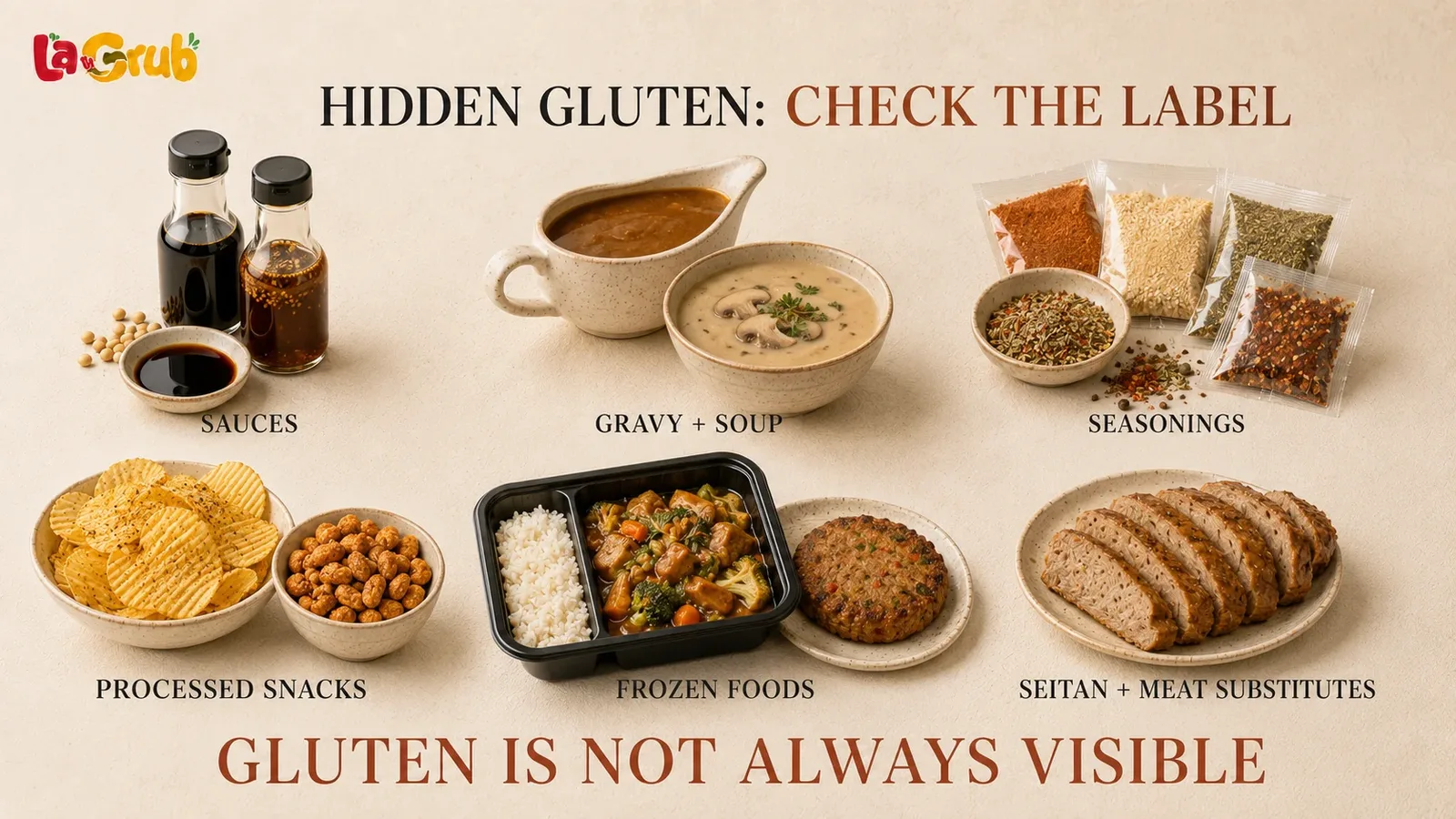
Hidden gluten often appears in sauces, seasonings, soups, snacks, candy, and frozen meals. These foods do not always look like bread or pasta.
Soy sauce often contains wheat. Gravies, cream soups, marinades, salad dressings, bouillon cubes, curry pastes, spice blends, and seasoning packets can use wheat flour, malt, or starches.
Processed snacks can also surprise readers. Examples include pretzels, flavored chips, granola bars, cereal bars, licorice, wafers, coated nuts, and some candies.
Sauces and Condiments to Check
Check soy sauce, teriyaki sauce, gravy, barbecue sauce, salad dressing, malt vinegar, and some marinades. These foods can carry wheat, malt, or barley-derived flavoring.
Choose products labeled gluten-free when a sauce uses complex ingredients. Tamari can be gluten-free, but only the label confirms the product.
Processed Foods to Check Twice
what food has gluten
Check frozen meals, veggie burgers, imitation meats, deli meats, soups, candy, and spice blends. These products can use gluten for texture, binding, flavor, or thickening.
Seitan is pure wheat gluten. Seitan can appear in vegetarian meat, vegan chicken, mock duck, deli slices, and high-protein plant-based meals.
Which Ingredients Mean Gluten on a Label?
Wheat, barley, rye, triticale, malt, seitan, and brewer’s yeast signal gluten risk. Some starches and flavorings also need checking.
Look for durum, semolina, farina, spelt, farro, bulgur, couscous, kamut, wheat berries, wheat bran, wheat germ, graham flour, malt extract, malt syrup, malt flavoring, and malt vinegar.
Some labels use vague words like starch, modified food starch, flavoring, hydrolyzed vegetable protein, or dextrin. These words need context, country rules, and gluten-free labeling support.
Wheat-Free Does Not Mean Gluten-Free
Wheat-free does not always mean gluten-free. A wheat-free food can still contain barley, rye, malt, brewer’s yeast, or shared-equipment gluten.
Read the full ingredient list. Then look for a gluten-free claim when celiac disease, wheat allergy, or gluten sensitivity makes mistakes risky.
Gluten-Free Labels Matter
In the United States, gluten-free labeled foods must meet the FDA gluten standard of less than 20 parts per million [ppm]. Other countries use their own rules.
A gluten-free claim gives better guidance than guessing from the front of a package. A natural food still needs clean handling to stay gluten-free.
Do Oats Have Gluten?
Plain oats do not belong to the wheat, barley, or rye group, but oats can pick up gluten. Cross-contact can happen during farming, transport, milling, or packaging.
Choose oats labeled gluten-free when you need to avoid gluten strictly. Some people with celiac disease also react to avenin, the oat protein, and choose to avoid oats.
Common oat foods include oatmeal, overnight oats, granola, oat bars, oat flour, oat milk, and oat-based cookies. Check each product label instead of assuming safety.
What Foods Are Naturally Gluten-Free?
Rice, potatoes, corn, beans, lentils, fruits, vegetables, eggs, meat, fish, milk, plain yogurt, nuts, and seeds are naturally gluten-free. Processing can change the risk.
Naturally gluten-free grains and starches include rice, quinoa, corn, millet, sorghum, buckwheat, amaranth, teff, tapioca, arrowroot, potato starch, and certified gluten-free oats.
Fresh foods make gluten checks easier. The risk grows when food uses sauces, coatings, seasonings, shared fryers, or mixed-grain ingredients.
Gluten-Free Foods Still Need Safe Handling
Naturally gluten-free foods can become unsafe through cross-contact. Shared cutting boards, shared toasters, flour dust, and shared frying oil create risk.
Rice, potatoes, beans, eggs, and vegetables need clean pans, clean utensils, and clean storage when someone has celiac disease.
How to Check Packaged Foods for Gluten
what food has gluten
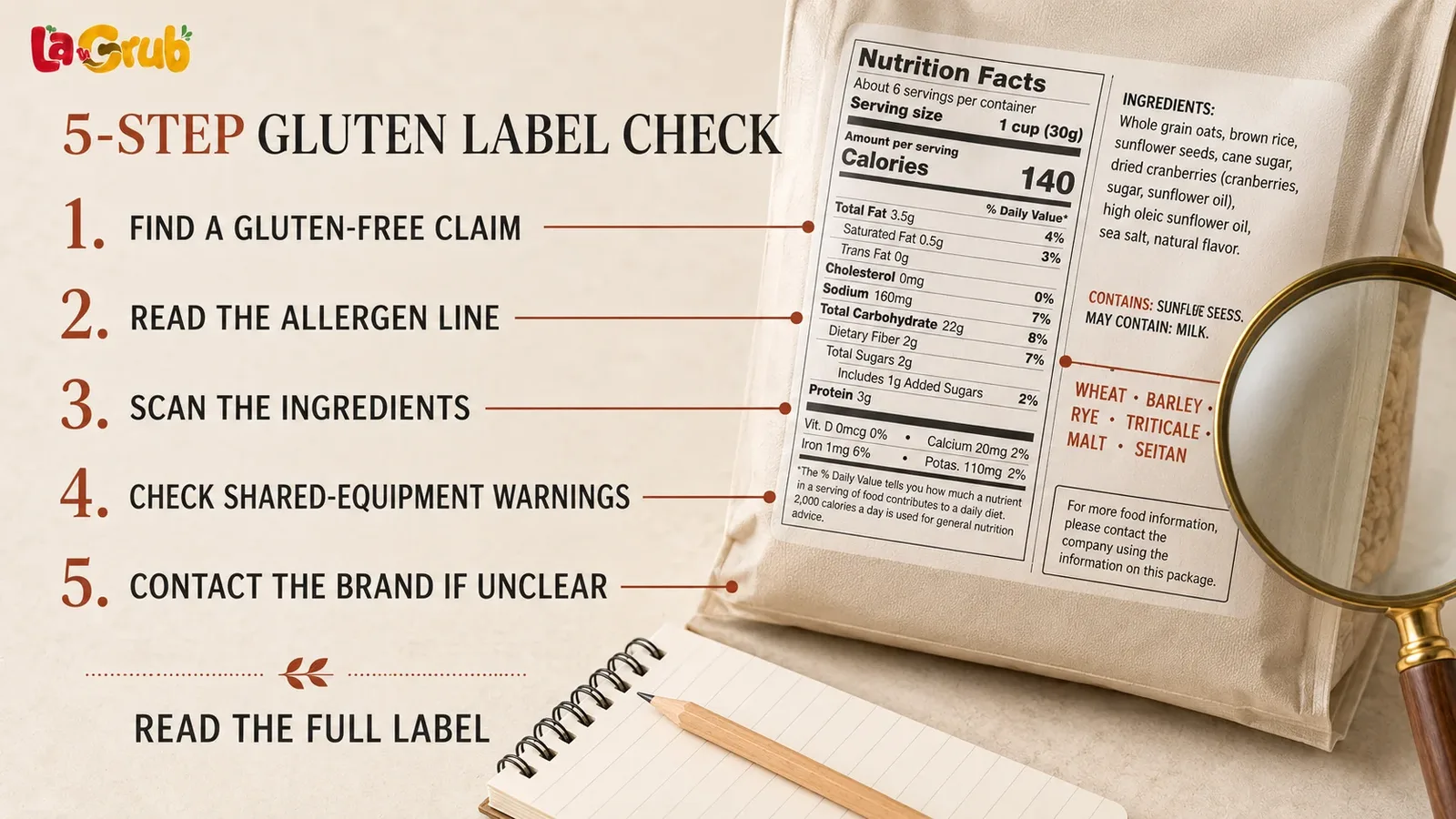
Check packaged food in 5 steps: claim, allergen line, ingredients, warnings, and brand support. This order catches obvious and hidden risks.
First, look for a gluten-free claim. Second, scan the allergen line for wheat. Third, read ingredients for barley, rye, malt, brewer’s yeast, and seitan.
Fourth, check advisory language about shared equipment. Fifth, contact the brand when the label uses unclear starches, flavorings, or fermented ingredients.
Quick Gluten Check Table
| Food or Task | Timing | Method | Difficulty |
|---|---|---|---|
| Bread, pasta, cereal | Before buying | Check wheat, barley, rye, triticale | Easy |
| Sauces and gravies | Before cooking | Check malt, wheat flour, starches, soy sauce | Medium |
| Oats and granola | Before serving | Choose gluten-free labeled oats | Medium |
| Fried restaurant food | Before ordering | Ask about shared fryers and breading | Medium |
| Home cooking | During prep | Use clean utensils, pans, and surfaces | Easy |
Who Should Check What Food Has Gluten?
People with celiac disease, wheat allergy, non-celiac gluten sensitivity, or clinician-directed diets need the strictest gluten checks. Other readers can use the guide for awareness.
When you ask what food has gluten because food causes symptoms, get personal medical advice before removing major food groups for a long time.
A gluten-free diet can feel simple at first, but missed grains, hidden sauces, shared fryers, and unclear labels create daily challenges.
Why Medical Needs Change the Rules
Celiac disease needs strict gluten avoidance because cross-contact can matter. A casual gluten-free choice and a medical gluten-free need require different kitchen care.
Someone avoiding gluten by preference can choose flexibility. Someone avoiding gluten for medical reasons needs cleaner prep, clearer labels, and safer restaurant questions.
How to Avoid Gluten When Eating Out
Ask about ingredients and preparation before ordering. Restaurant menus can miss wheat flour, soy sauce, malt vinegar, shared fryers, and flour-dusted surfaces.
Use clear questions. Ask, “Does the sauce contain wheat?” Ask, “Do you use a shared fryer?” Ask, “Can the kitchen use clean utensils?”
Safer choices often include plain grilled meat, plain fish, rice, baked potatoes, salads without croutons, steamed vegetables, eggs, and simple fruit. Sauces still need checking.
Restaurant Phrases That Help
Say the reason clearly when gluten makes you sick. Say, “I need gluten-free food because gluten causes a medical reaction.”
Then ask for sauce on the side, no breading, no flour dusting, no croutons, no wheat noodles, and no shared fryer when the kitchen can manage the request.
How to Build Meals Without Gluten
Build meals around naturally gluten-free bases, proteins, vegetables, and simple sauces. Rice bowls, potato plates, salads, soups, tacos with corn tortillas, and lentil stews all work.
Start with rice, quinoa, potatoes, corn tortillas, buckwheat noodles, or certified gluten-free pasta. Add chicken, fish, eggs, beans, lentils, tofu, yogurt, or cheese.
Then add vegetables and a checked sauce. LaGrub’s soft roti guide helps readers understand wheat flatbread structure, while gluten-free meals need non-wheat swaps.
Easy Gluten-Free Meal Examples
Simple gluten-free meals can still taste complete. Try rice with grilled chicken, lentil soup with salad, corn tacos with beans, or potatoes with eggs and vegetables.
You can also make quinoa bowls, chickpea salads, rice noodle stir-fries with gluten-free tamari, baked fish with vegetables, and yogurt bowls with fruit and nuts.
What Food Has Gluten in Breakfast Foods?
Many breakfast foods have gluten because they use wheat, barley malt, or mixed grains. Check cereal, toast, pancakes, waffles, muffins, pastries, granola, and breakfast bars.
When you ask what food has gluten at breakfast, start with wheat bread, malted cereals, wheat pancakes, bakery pastries, and granola that uses ordinary oats.
Safer breakfast bases include plain eggs, fruit, yogurt, rice porridge, potatoes, corn tortillas, and certified gluten-free oats. Toppings and sauces still need checking.
Breakfast Label Clues
Malt flavoring, wheat flour, barley malt, and ordinary oats create common breakfast risks. These clues appear on cereal, granola, toaster pastries, and flavored oatmeal.
A cereal can look rice-based or corn-based but still use barley malt for flavor. A granola can look oat-based but still need gluten-free certification.
What Food Has Gluten in Snacks and Drinks?
Pretzels, crackers, cookies, wafers, beer, malt drinks, and many cereal bars often contain gluten. Snack labels need close reading.
When you ask what food has gluten in snacks, check wheat flour, malt extract, barley malt, rye flakes, wheat starch, and shared-production warnings.
Gluten-free snack options include plain popcorn, fruit, nuts, rice cakes, corn chips labeled gluten-free, yogurt, hummus with vegetables, and certified gluten-free crackers.
Drink Labels to Check
Beer and malt drinks usually contain gluten from barley. Some flavored drinks, powdered mixes, and bottled smoothies can also use grain-based additives.
Wine, plain coffee, plain tea, milk, and many juices are naturally gluten-free, but flavored versions still need label checks.
What Food Has Gluten in Home Baking?
Most standard baking flour contains gluten because standard flour usually comes from wheat. All-purpose flour, bread flour, cake flour, pastry flour, and self-rising flour contain wheat gluten.
When you ask what food has gluten in baking, check pie crust, cookies, muffins, cakes, pancakes, waffles, quick breads, yeast breads, rolls, and pizza dough.
Gluten-free baking needs different structure. Rice flour, almond flour, sorghum flour, oat flour labeled gluten-free, tapioca starch, and potato starch behave differently from wheat flour.
Baking Substitutions Need Recipe Changes
Replacing wheat flour with 1 gluten-free flour rarely gives the same texture. Wheat gluten gives stretch, chew, lift, and shape.
A gluten-free flour blend often needs starch, binder, moisture, and resting time. Follow tested recipes when baking for someone who must avoid gluten.
How to Replace Foods That Have Gluten
Replace gluten foods by matching the meal role first. Bread needs a bread swap, pasta needs a pasta swap, and sauce needs a thickener swap.
Choose rice, potatoes, quinoa, corn tortillas, gluten-free pasta, buckwheat noodles, rice noodles, certified gluten-free oats, and gluten-free bread for everyday meals.
Use cornstarch, arrowroot, tapioca starch, potato starch, or rice flour to thicken sauces. Check broth, stock cubes, and seasoning packets before cooking.
Simple Swap Examples
Use corn tortillas instead of flour tortillas, rice noodles instead of wheat noodles, and tamari instead of regular soy sauce. These swaps keep meals familiar.
Serve burgers in lettuce cups, rice bowls, baked potatoes, or gluten-free buns. Choose checked condiments and clean utensils for safer serving.
FAQs About Foods With Gluten
Does rice have gluten?
No. Plain rice is naturally gluten-free. Check flavored rice packets because seasoning mixes can contain wheat or barley ingredients.
Does pasta have gluten?
Yes. Traditional pasta usually contains gluten because most pasta uses wheat, durum wheat, or semolina.
Does soy sauce have gluten?
Yes. Many soy sauces contain wheat. Choose a product labeled gluten-free or use gluten-free tamari.
Are potatoes gluten-free?
Yes. Plain potatoes are naturally gluten-free. Fries need checking because shared fryers can transfer gluten.
Can people without gluten issues eat gluten?
Yes. Many people can eat gluten without problems. Ask a clinician before removing gluten for health symptoms.
Final Takeaway: What Food Has Gluten?
The foods most likely to have gluten are foods made from wheat, barley, rye, or triticale. Bread, pasta, noodles, crackers, cereal, beer, pastries, seitan, breaded foods, sauces, malt products, and some processed snacks need the closest checks.
Start with the 4 gluten grains, then read labels for hidden ingredients. For more cooking ideas after checking ingredients, browse LaGrub’s full recipe collection and choose recipes that match your kitchen needs.

Sahar Syed
Sahar Syed writes about home cooking, food culture, and practical kitchen guidance for LaGrub.
Get a desi recipe worth cooking, every week
One tested recipe a week. Nothing else, and unsubscribe any time.


