

Soft roti starts with the right flour, enough water, proper resting, and a hot tawa. Learn which flour works best for roti and how to adjust substitutes in any kitchen.
The best flour for roti is finely milled whole wheat atta or chapati flour. This answer to what is the best flour for roti works for most home cooks because atta makes soft, flexible, puffed flatbread.
You can still make good roti without atta. Use a 50:50 blend of regular whole wheat flour and all-purpose flour when South Asian chapati flour is unavailable.
Many readers ask what is the best flour for roti after regular flour gives dry, chewy, or stiff flatbread. The answer depends on flour grind, water absorption, gluten behavior, and cooking heat.
Use what is the best flour for roti as a buying question, not a brand question. The flour must match your water, pan, and texture goal.
What Is the Best Flour for Roti in Simple Words?
Choose atta first, chapati flour second, and a whole wheat blend third. This simple ranking helps you buy flour without confusion.
Roti needs flour that absorbs water well, rolls thinly, and stays tender after cooking. Atta gives that balance better than bread flour.
Atta usually comes from whole wheat, but the milling style changes the final texture. Fine milling creates smoother dough and softer roti.
Roti appears in many food cultures, including Indian, Pakistani, Bangladeshi, Sri Lankan, East African, Caribbean, and diaspora kitchens. LaGrub treats roti as a global flatbread, not one country’s food.
Ask what is the best flour for roti before buying the biggest bag. The right flour saves time, water, and frustration.
Answer what is the best flour for roti by testing softness after cooking, not only by reading the front label.
For wider meal context, LaGrub explains Desi cooking methods across spices, breads, rice, and family-style meals.
Why Does Atta Make Softer Roti Than Regular Whole Wheat Flour?
what is the best flour for roti
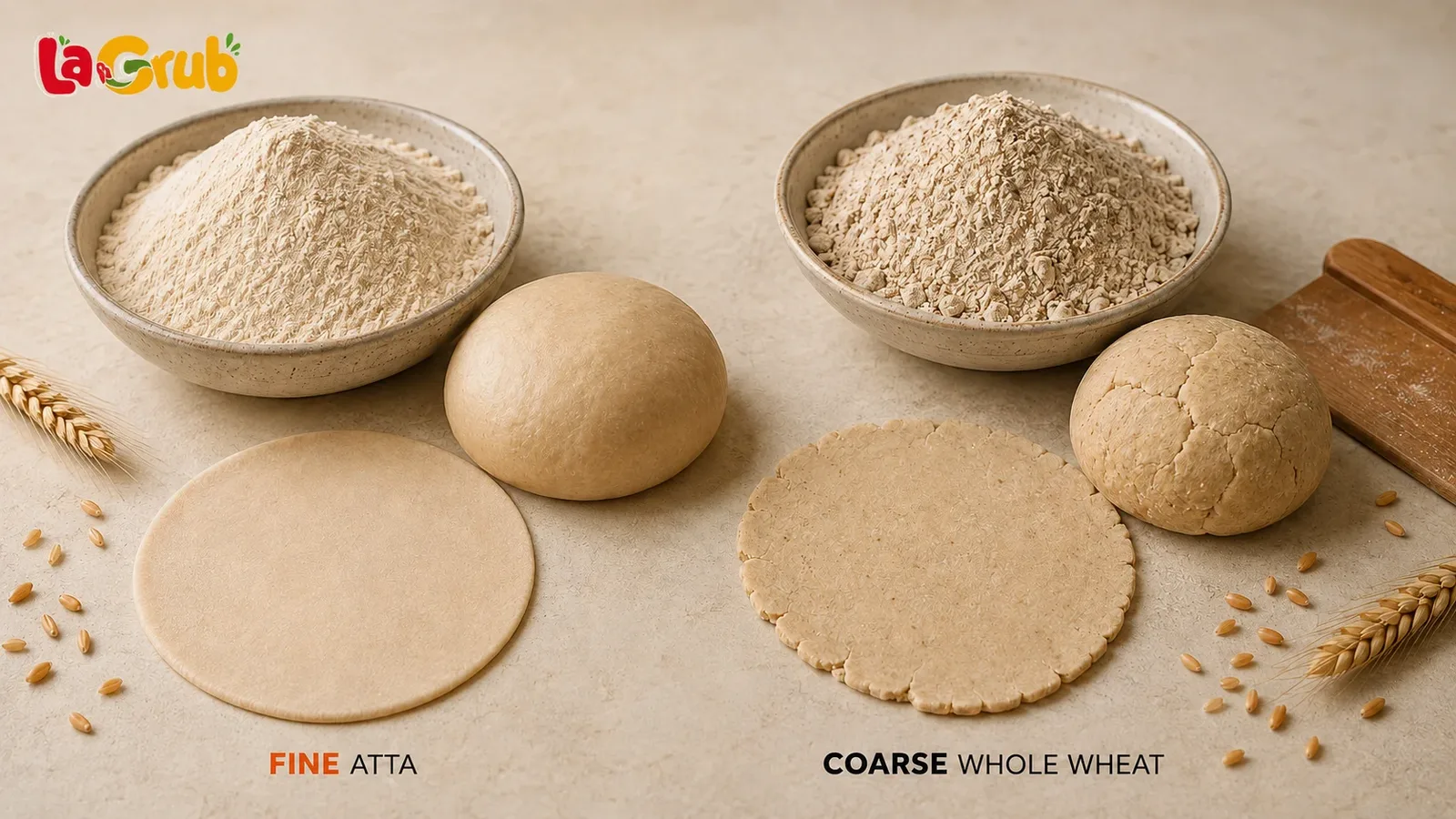
Atta makes softer roti because the flour grind feels finer and smoother. The smooth texture helps dough stretch without tearing.
Regular whole wheat flour often feels coarser. Coarse bran can cut through dough structure and create a rougher bite.
Atta also hydrates differently. You often need 3/4 cup (180 ml) warm water for 1.5 cups (180 g) atta.
Western whole wheat flour can still work. You must adjust water, resting time, and rolling pressure for better softness.
The question what is the best flour for roti often starts with puffing problems. Fine atta helps steam push the roti open.
Good technique still matters after you answer what is the best flour for roti. Uneven rolling blocks puffing even with great atta.
Fine Milling Helps Roti Puff
Fine flour creates even sheets. Even sheets trap steam, so the roti can puff on a hot tawa.
Roll each roti about 6 inches (15 cm) wide for everyday chapati. Keep thickness even from center to edge.
Whole Wheat Flavor Still Matters
Good atta gives nutty flavor, soft bite, and light chew. Fresh flour smells clean, wheat-like, and slightly sweet.
Old flour smells dusty or bitter. Replace flour when the bag smells stale or the dough tastes flat.
What Is the Best Flour for Roti If You Cannot Find Atta?
what is the best flour for roti
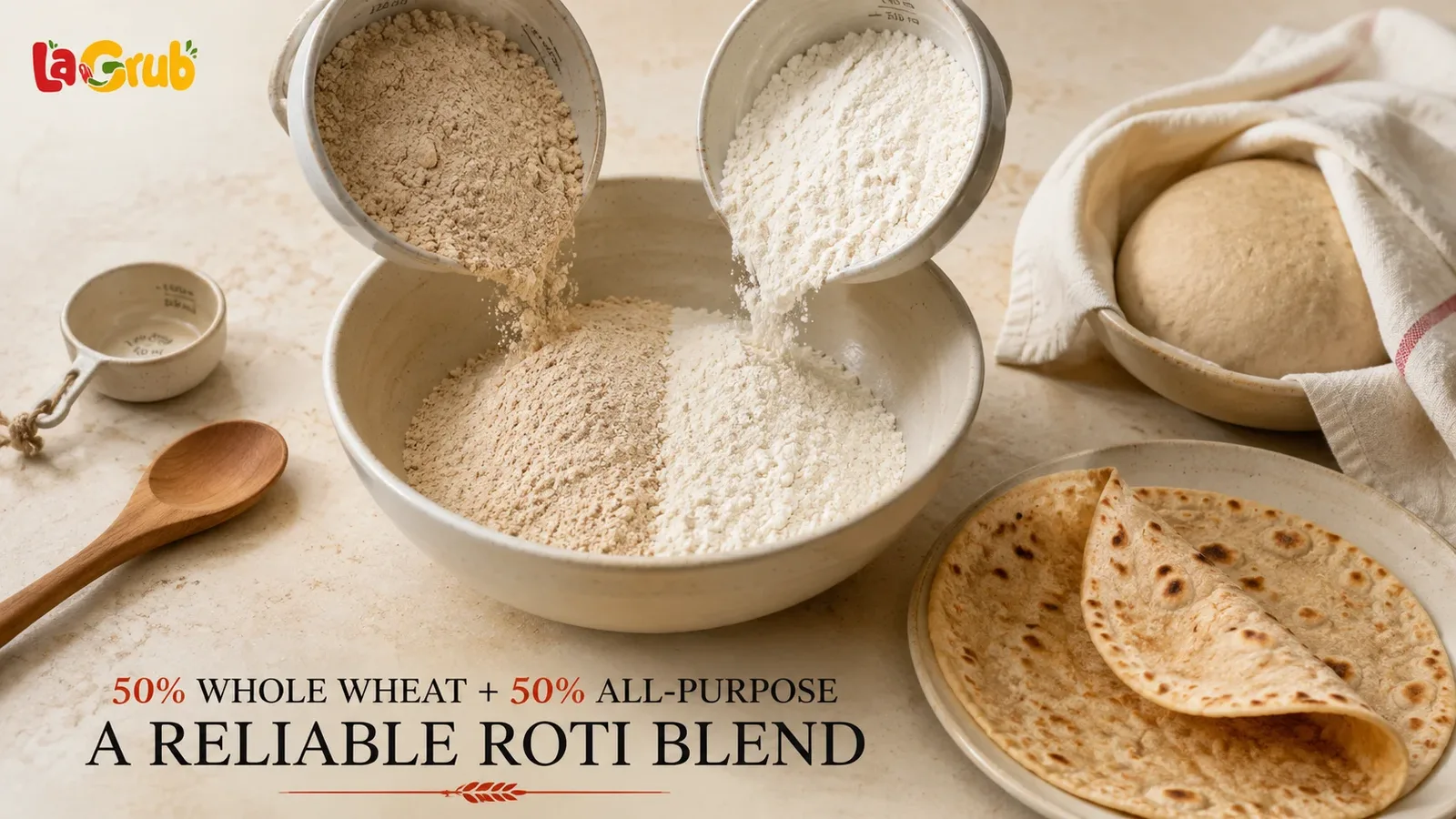
Use 50 percent whole wheat flour and 50 percent all-purpose flour. This blend gives better softness than 100 percent coarse whole wheat flour.
This substitute helps readers in the United States, Canada, Europe, Australia, and small towns without South Asian grocery stores.
Use 3/4 cup (90 g) whole wheat flour and 3/4 cup (90 g) all-purpose flour for 8 small rotis.
Add 2 teaspoons (10 ml) neutral oil when your dough feels dry. Oil improves flexibility during rolling.
Readers ask what is the best flour for roti when local supermarkets only stock baking flour. A blend solves many first attempts.
Keep asking what is the best flour for roti by location. Your best option can change by country, store, and flour freshness.
Use White Whole Wheat Flour for Milder Flavor
White whole wheat flour tastes softer than red whole wheat flour. The lighter flavor helps new roti makers.
Use white whole wheat flour with all-purpose flour when children or mild-flavor eaters dislike strong wheat taste.
Use Bread Flour Only in Small Amounts
Bread flour creates chew. Too much bread flour makes roti rubbery and harder to bite.
Use 1/4 cup (30 g) bread flour with 1.25 cups (150 g) atta only when dough tears often.
Which Flour Types Work for Different Roti Goals?
Your goal decides your flour choice. Soft chapati, puffed phulka, layered paratha, and gluten-free roti need different flour behavior.
Use the table below as a buying and cooking guide. The table gives timing, method, and difficulty for common flour choices.
| Task | Timing | Method | Difficulty |
|---|---|---|---|
| Soft everyday roti | 30 minutes | Use 1.5 cups (180 g) chakki atta with warm water | Easy |
| Puffed phulka | 35 minutes | Use fine atta, roll 6 inches (15 cm), cook on high heat | Medium |
| Supermarket substitute | 35 minutes | Mix whole wheat and all-purpose flour in equal parts | Easy |
| Layered paratha | 50 minutes | Use atta with 2 tablespoons (30 ml) oil or ghee | Medium |
| Gluten-free roti | 40 minutes | Use jowar, bajra, ragi, or maize flour with hot water | Hard |
Choose Chakki Atta for Everyday Roti
Chakki atta suits daily roti because the dough rolls easily and cooks into flexible bread.
Use chakki atta for lunch boxes, dinner rotis, and simple wraps with vegetables or grilled chicken.
Choose Sharbati Atta for Extra Softness
Sharbati atta tastes slightly sweeter and often feels softer. Many home cooks choose sharbati atta for tender chapati.
Use sharbati atta when you want rotis that stay soft for 30 minutes after cooking.
Choose Multigrain Atta for Texture
Multigrain atta adds flavor from grains such as millet, barley, soy, oats, and chickpea flour.
Use multigrain atta when you enjoy a firmer bite and deeper grain flavor.
Ask what is the best flour for roti after you choose the meal type. A wrap, paratha, and phulka need different dough strength.
Can You Use All-Purpose Flour, Bread Flour, or Plain Flour for Roti?
Yes, you can use these flours, but the roti will change. Each substitute changes chew, color, flavor, and softness.
All-purpose flour creates a softer but less wheat-forward flatbread. Bread flour creates more chew and stronger stretch.
Plain flour works better when you blend plain flour with whole wheat flour. A 50:50 blend gives better balance.
Do not expect all-purpose flour roti to taste like classic atta roti. The flavor will feel closer to a soft wrap.
Many cooks ask what is the best flour for roti after trying bread flour. Bread flour solves tearing but creates chew.
Choose what is the best flour for roti by the bite you want. Soft roti needs tenderness before stretch.
All-Purpose Flour Gives Softness Without Wheat Depth
All-purpose flour rolls easily and cooks quickly. The finished roti lacks the nutty taste of whole wheat atta.
Add 1/2 teaspoon (3 g) salt per 1.5 cups (180 g) flour to improve flavor.
Bread Flour Gives Strength Without Tenderness
Bread flour handles stretching well, but high gluten creates a chewy flatbread. Chewy roti feels tough after cooling.
Use bread flour only when you blend a small amount with softer flour.
What Flour Alternatives Work for Roti Around the World?
Millet, corn, sorghum, chickpea, and rice flours can make flatbreads, but wheat atta makes classic roti. Alternatives need different handling.
Many global cooks use local grains because roti-style flatbreads adapt well. Texture changes with each flour.
Use bajra flour for earthy rotis, jowar flour for mild sorghum rotis, and maize flour for corn-based flatbreads.
Use chickpea flour for besan roti, and rice flour for softer regional flatbreads like akki roti and pathiri.
People ask what is the best flour for roti when wheat does not suit diet needs. The answer changes with texture expectations.
Gluten-Free Flours Need Hot Water
Gluten-free flours lack wheat structure. Hot water helps starches bind and makes dough easier to pat.
Use 1 cup (120 g) jowar flour with 3/4 cup (180 ml) hot water for beginner practice.
Millet Rotis Need Gentle Handling
Millet dough breaks more easily than wheat dough. Press millet roti by hand instead of rolling hard.
Cook millet roti on medium heat and serve fresh. Millet rotis dry faster than wheat rotis.
How to Choose Roti Flour in a Grocery Store
To choose roti flour in a grocery store, read the bag label, check the grind, and match the flour to your goal.
Look for words such as atta, chapati flour, chakki atta, stone-ground, whole wheat, medium atta, or sharbati atta.
Do not buy flour only because the packet says gold, premium, or family pack. Those words do not guarantee soft roti.
Choose smaller bags when you cook roti only 1 or 2 times each week. Fresh flour gives better flavor.
The shelf can make what is the best flour for roti feel complicated. Start with labels, then judge softness after cooking.
Check the Texture Before Buying Again
Good atta feels fine between your fingers. Coarse flour feels sandy and can produce rough rotis.
Store atta in an airtight container after opening. Use a container that holds 5 lb (2.3 kg) flour safely.
Match Flour to Your Cooking Style
Choose medium atta for softer rotis. Choose wholemeal atta for stronger flavor and more fiber.
Choose sharbati atta for softness. Choose multigrain atta for texture and grain variety.
How to Make Roti Softer Even With Average Flour
what is the best flour for roti
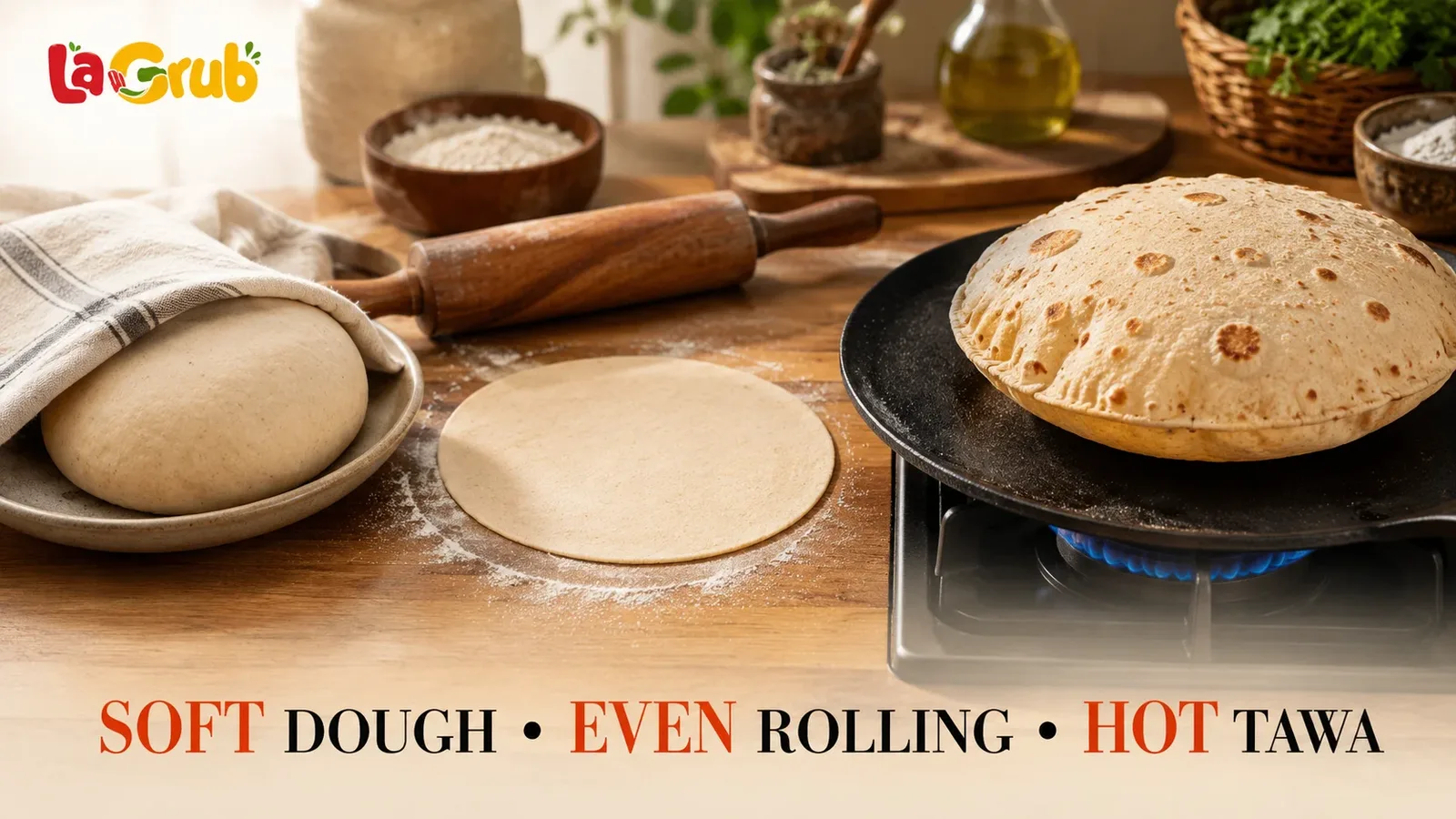
To make roti softer with average flour, add enough water, knead until smooth, rest the dough, and cook quickly.
Flour choice matters, but technique decides the final result. Dry dough creates hard roti even with good atta.
Use warm water, not cold water. Warm water softens bran and helps the dough feel smooth faster.
Rest dough for 20 minutes before rolling. Resting helps flour absorb water and reduces tearing.
Many readers search what is the best flour for roti because their dough cracks. Better hydration often fixes the real problem.
Use Enough Water for Soft Dough
Soft dough should press easily under your finger. Dry dough cracks around the edges.
Add water 1 tablespoon (15 ml) at a time until the dough feels smooth and pliable.
Use the Right Tawa Heat
Hot tawa heat helps roti puff. A cold pan dries the surface before steam builds inside.
Heat a cast-iron skillet or tawa for 3 minutes before cooking. Cook each side for 30 to 45 seconds.
For food budget planning, LaGrub’s homemade food costs guide shows why fresh roti helps home meals feel affordable.
How to Store Roti Flour and Cooked Roti Properly
To store roti flour properly, keep flour dry, sealed, cool, and away from sunlight. Fresh flour makes better dough.
Use opened atta within 2 to 3 months for the best flavor. Refrigerate flour when your kitchen feels hot or humid.
Freeze extra flour for 6 months in airtight bags. Bring flour to room temperature before kneading.
Store cooked roti in a clean towel inside a covered container. The towel traps steam without making roti soggy.
The question what is the best flour for roti also includes freshness. Even good flour fails when poor storage turns flour stale.
Store Dough for Short Use
Store dough in the refrigerator for 24 hours. Coat dough with 1 teaspoon (5 ml) oil before covering.
Bring cold dough to room temperature for 20 minutes before rolling.
Store Cooked Roti for Later Meals
Stack cooked rotis while warm. Cover the stack with a cotton towel for better softness.
Reheat roti on a hot pan for 15 seconds per side. Brush with ghee only when you want richer flavor.
What Is the Best Flour for Roti for Different Meals?
The best flour changes by meal, filling, and cooking style. Everyday roti needs different texture than wraps or stuffed flatbreads.
Use soft atta for dinner roti with lentils, curries, eggs, vegetables, or grilled meats. Flexible roti tears less.
Use stronger atta for stuffed paratha because the dough must hold potatoes, paneer, cauliflower, or minced meat.
Use lighter blends for wraps with chicken tikka, roasted vegetables, hummus, salad, or kebab fillings.
For wider meal comparison, LaGrub’s regional bread differences guide explains how roti, naan, paratha, dosa, puri, and bhatura fit meals.
Ask what is the best flour for roti after choosing your plate. A curry meal needs softer roti than a stuffed lunch wrap.
FAQs About the Best Flour for Roti
Is atta the best flour for roti?
Yes. Finely milled whole wheat atta gives the best balance of softness, flavor, stretch, and puff.
Can I make roti with regular whole wheat flour?
Yes. Blend regular whole wheat flour with all-purpose flour for softer roti and easier rolling.
Can I make roti with bread flour?
Yes, but bread flour makes roti chewy. Use bread flour in small amounts only.
Is gluten-free flour good for roti?
Yes, gluten-free flour works for roti-style flatbreads. Use hot water with jowar, bajra, ragi, or maize flour.
Why does my roti become hard after cooking?
Dry dough, low pan heat, overcooking, and poor storage make roti hard after cooking.
Final Takeaway: Choose Flour for Soft Roti Anywhere
The answer to what is the best flour for roti depends on access, texture goal, and cooking method.
Save what is the best flour for roti as a repeat test. Your favorite flour should give soft roti 3 times in a row.
Choose finely milled atta or chapati flour first. Use whole wheat and all-purpose flour as a reliable global substitute.
Use warm water, soft dough, proper resting, even rolling, and hot tawa heat for better results.
LaGrub helps home cooks understand global food through clear cooking guides, practical swaps, and everyday meals. Read more Desi cooking methods before planning your next roti meal.

Sahar Syed
Sahar Syed writes clear, practical food guides for home cooks.
Get a desi recipe worth cooking, every week
One tested recipe a week. Nothing else, and unsubscribe any time.


