

To make soft roti, use finely milled atta or chapati flour, add enough water, rest the dough, roll evenly, cook fast, and keep the rotis covered after cooking.
Soft roti starts with soft dough, even rolling, medium-high tawa heat, and covered storage after cooking. If roti turns hard, the usual cause is tight dough, low heat, overcooking, too much dry flour, or uncovered storage.
This guide explains how to make soft roti with exact flour, water, kneading, resting, cooking, and storage steps. You can use the same method for roti, chapati, phulka, and thin whole-wheat flatbread in global home kitchens.
How to Make Soft Roti in Simple Words
To make soft roti, mix atta with water, knead until smooth, rest the dough, roll evenly, and cook fast on a hot tawa. The full softness chain takes 45 minutes, including dough rest and cooking time.
The best soft roti does not need many ingredients. You need 2 cups (240 g) atta or chapati flour, 3/4 cup (180 ml) warm water, 1/2 teaspoon (3 g) salt, and 1 teaspoon (5 ml) oil or ghee when desired.
The phrase how to make soft roti sounds simple, but soft texture depends on 7 connected steps. Flour, hydration, kneading, rest, rolling, heat, and covering all shape the final roti.
Use Soft Dough, Not Dry Dough
Soft dough bends easily under your fingers. The dough should feel smooth and pliable, not sticky enough to cling strongly to your hand.
Add water slowly because flour brands absorb water differently. Start with 2/3 cup (160 ml), then add 1 tablespoon (15 ml) at a time.
Cook Roti Fast, Not Slowly
A hot tawa cooks roti before the surface dries. A slow pan dries roti and creates stiff edges.
Heat the tawa for 3 minutes before cooking. Use medium-high heat on gas, electric, induction, or ceramic stoves.
Why Does Roti Become Hard After Cooking?
Roti becomes hard when dough lacks moisture, the tawa stays too cool, or cooked rotis lose steam. Dryness causes most hard roti problems, not one single ingredient.
Readers often ask how to make soft roti because their first roti feels soft on the pan, then hardens after 10 minutes. The storage step matters as much as the dough step.
Choose finely milled flour such as atta, chapati flour, or soft whole-wheat flour.
Add enough water so the dough feels soft before resting.
Rest the dough for 20 to 30 minutes under a damp towel.
Roll each roti to 6 to 7 inches (15 to 18 cm) with even thickness.
Cook each roti in 60 to 90 seconds on a hot tawa.
Cover cooked rotis inside a towel-lined box or casserole.
Tight Dough Makes Dry Roti
Tight dough gives you neat circles but dry bread. Soft roti needs enough water for steam inside the dough.
Press the rested dough with one finger. A soft dent should form, and the dough should slowly spring back.
Overcooking Removes Moisture
Overcooking makes roti brittle. Brown spots should appear, but black patches and long contact time dry the bread.
Flip roti when small bubbles appear. Do not wait until the first side becomes fully brown.
What Flour Makes the Softest Roti?
Finely milled atta or chapati flour makes the softest roti. Chakki atta works best for classic roti, but soft whole-wheat flour also works with better hydration.
LaGrub has a full guide to best roti flour for cooks choosing between atta, whole wheat, bread flour, and gluten-free blends.
The best flour depends on your market. In the United States, United Kingdom, Canada, Australia, Europe, and Gulf countries, South Asian groceries usually sell atta or chapati flour.
Atta and Chapati Flour
Atta gives roti a soft bite because the flour has fine bran and enough gluten for rolling. Chapati flour usually means the same style of flour.
Use 2 cups (240 g) atta for 8 rotis. Add 3/4 cup (180 ml) warm water for a soft starting dough.
Whole Wheat Flour
Regular whole wheat flour can make roti, but coarse bran can create firmer texture. Use extra water and longer resting time.
Mix 1 1/2 cups (180 g) whole wheat flour with 1/2 cup (60 g) all-purpose flour for softer supermarket-flour roti.
Bread Flour and All-Purpose Flour
Bread flour creates chewy roti because high protein builds stronger gluten. All-purpose flour makes softer but less nutty roti.
Use bread flour only in small blends. Use 1/4 cup (30 g) bread flour with 1 3/4 cups (210 g) whole wheat flour.
How to Make Roti Dough Super Soft

how to make soft roti
To make roti dough super soft, add warm water slowly, knead for 6 to 8 minutes, and rest for 20 to 30 minutes. The dough should feel smooth, elastic, and soft before rolling.
This step answers the most common how to make soft roti problem. Many hard rotis start with dough that feels too firm before cooking.
Use the Right Water Range
Use 3/4 cup (180 ml) water for 2 cups (240 g) atta as a starting point. Add up to 2 tablespoons (30 ml) more water when flour feels dry.
Warm water around 100°F (38°C) helps flour absorb moisture faster. Room-temperature water also works with a longer rest.
Knead Until the Surface Smooths
Knead with the heel of your palm. Fold, press, turn, and repeat until cracks disappear from the dough surface.
A 6-minute knead works for most dough. A 2-minute second knead after resting improves texture before rolling.
Rest the Dough Properly
Resting relaxes gluten and hydrates the flour. Cover the dough with a damp towel, lid, or reusable wrap.
Rest for 20 minutes minimum. Rest for 30 minutes when using coarse whole wheat flour or cold kitchen conditions.
How to Roll Roti for Soft Texture
how to make soft roti
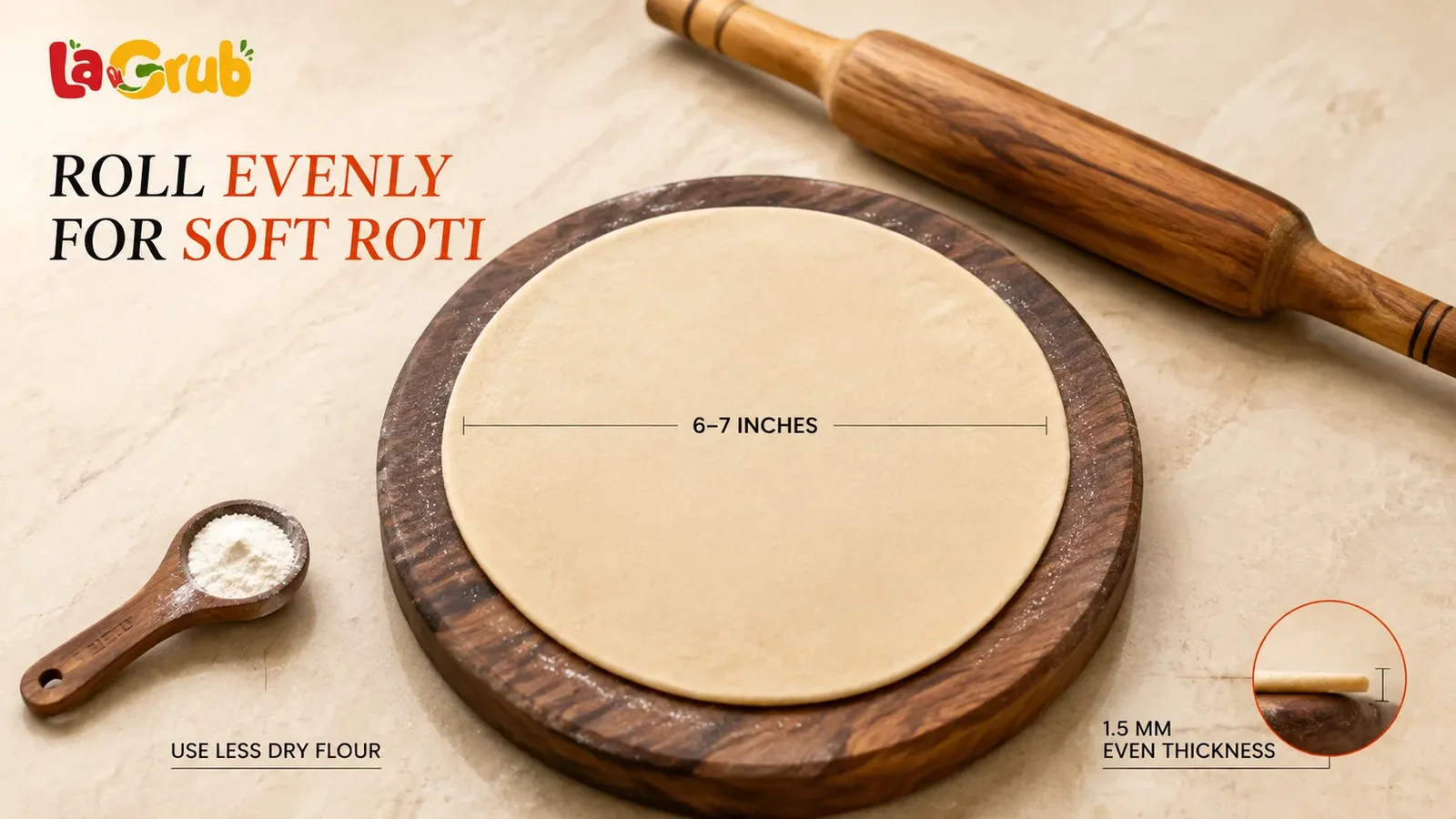
To roll roti for soft texture, roll each dough ball evenly and use only light dusting flour. Uneven rolling creates thick patches, dry edges, and weak puffing.
Divide dough into 8 balls of 2 ounces (55 g) each. Roll each ball into a smooth round before using the rolling pin.
Keep Every Roti the Same Thickness
Roll each roti to about 1/16 inch (1.5 mm) thickness. Aim for a 6 to 7 inch (15 to 18 cm) circle.
Thick centers stay doughy, while thin edges become crisp. Even thickness creates steam that softens the full roti.
Use Less Dry Flour
Dust the board lightly, then shake extra flour off the rolled roti. Extra dry flour burns on the tawa and dries the surface.
Use 1 tablespoon (8 g) dry flour for 4 rotis. Add more only when dough sticks to the board.
How to Cook Roti on a Tawa
To cook roti on a tawa, preheat the tawa, cook the first side briefly, flip, cook the second side, then puff with pressure or flame. Each roti should cook in 60 to 90 seconds.
This timing helps how to make soft roti because fast cooking traps steam. Slow cooking pushes moisture out and hardens the bread.
| Task | Timing | Method | Difficulty |
|---|---|---|---|
| Mix dough | 5 minutes | Combine 2 cups (240 g) atta with 3/4 cup (180 ml) warm water | Easy |
| Knead dough | 6 to 8 minutes | Press, fold, and turn until smooth | Medium |
| Rest dough | 20 to 30 minutes | Cover under a damp towel or lid | Easy |
| Roll roti | 1 minute each | Roll to 6 to 7 inches (15 to 18 cm) | Medium |
| Cook roti | 60 to 90 seconds each | Use medium-high heat on a tawa or griddle | Medium |
| Store roti | Right away | Stack in a towel-lined box or casserole | Easy |
Use the 3-Flip Method
Place roti on the hot tawa. Flip when small bubbles appear across the surface after 15 to 20 seconds.
Cook the second side until brown spots appear. Flip once more, then press gently with a clean cloth or spatula.
Control Tawa Heat
The tawa should sizzle when you sprinkle 3 drops of water. The drops should evaporate within 2 seconds.
Lower the heat for smoking flour. Raise the heat when roti takes more than 90 seconds to cook.
How to Make Roti Puff Properly
To make roti puff properly, roll evenly, keep the tawa hot, and press gently after the second flip. Puffing happens when steam expands between two cooked layers.
Puffing helps texture, but a roti can stay soft without a full balloon puff. The main goal remains moist, flexible bread.
Create Steam Pockets
Steam pockets need even thickness. Smooth edges and balanced rolling help the top and bottom layers separate during cooking.
Use firm, even rolling strokes. Do not press one side harder than the other side.
Finish on Flame or Tawa
Gas cooks can finish phulka over direct flame for 3 to 5 seconds per side. Use tongs and avoid burning the surface.
Electric and induction cooks can press roti with a folded towel on the tawa. Pressure helps steam spread through the roti.
How to Keep Roti Soft After Cooking
how to make soft roti
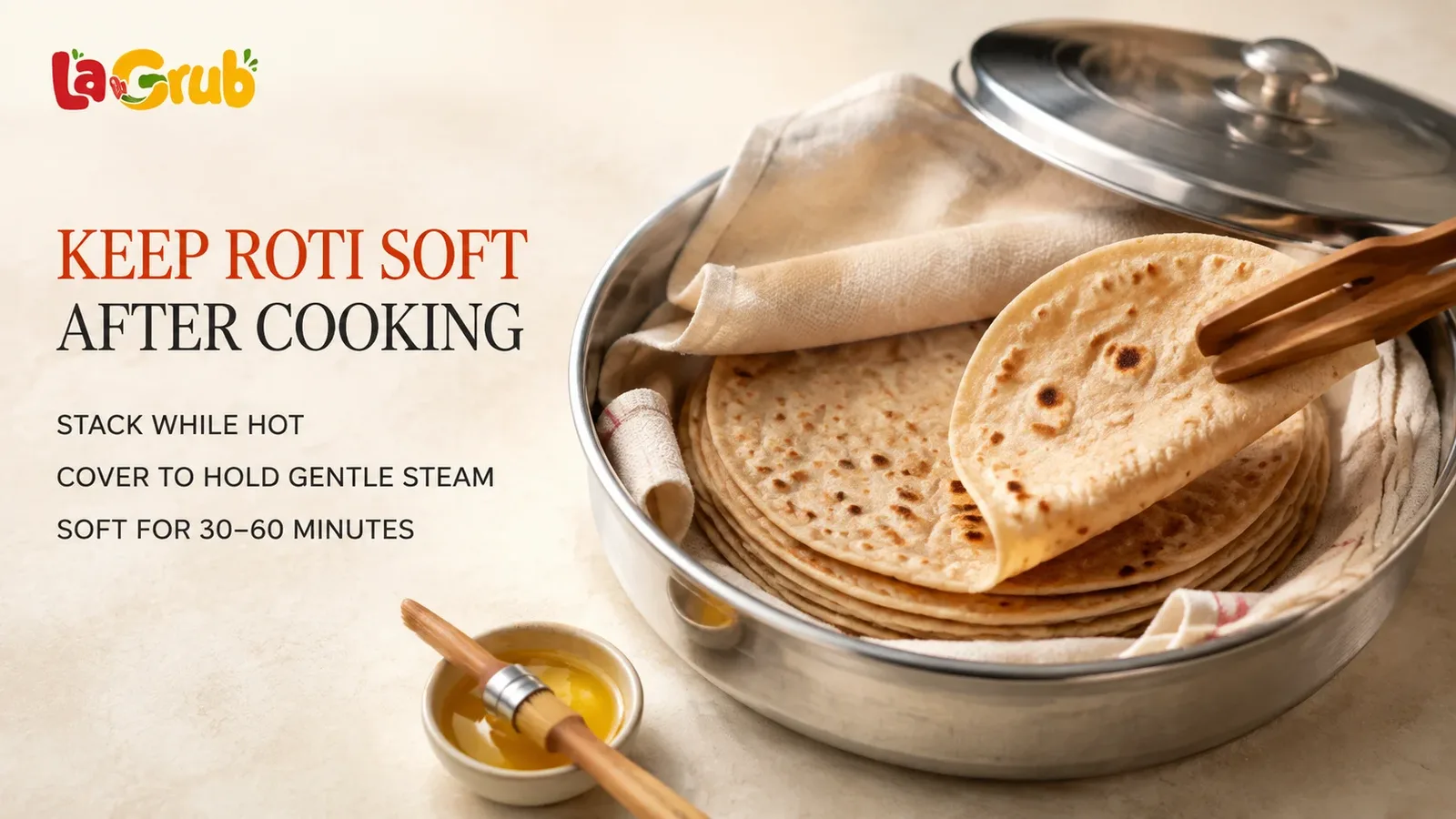
To keep roti soft after cooking, stack each roti immediately and cover the stack with a towel. Covered steam keeps roti soft for 30 to 60 minutes.
This section matters because how to make soft roti includes storage, not only cooking. Many perfect rotis turn stiff because steam escapes after cooking.
Use a Towel-Lined Box
Line a container with a clean cotton towel. Add each hot roti, then fold the towel over the stack.
Use a casserole, bread box, tortilla warmer, or lidded stainless steel container. Keep the lid slightly loose for 2 minutes.
Brush Lightly With Ghee
Brush ghee or oil on roti when you need longer softness. Use 1/4 teaspoon (1 ml) per roti.
Skip ghee for daily light meals. Use ghee for lunch boxes, dinner parties, freezer rotis, and travel meals.
How to Fix Chewy, Dry, or Thick Roti
Fix chewy roti by lowering gluten strength, adding water, resting longer, and rolling thinner. Fix dry roti by reducing cooking time and covering faster.
Chewy roti usually comes from bread flour, overworked dough, thick rolling, or too little rest. Dry roti usually comes from low heat or uncovered storage.
Fix Hard Roti
Add 1 tablespoon (15 ml) extra water to the next dough batch. Rest the dough for 30 minutes before rolling.
Cook on a hotter tawa and remove each roti before large dark patches form.
Fix Chewy Roti
Use atta instead of bread flour. Blend high-protein flour with all-purpose flour when atta is unavailable.
Rest dough longer after kneading. A 30-minute rest reduces resistance and makes rolling easier.
Fix Dry Stored Roti
Sprinkle 1 teaspoon (5 ml) water over 2 rotis before reheating. Warm for 15 seconds in a microwave or hot pan.
Cover reheated rotis immediately. Steam from reheating softens edges and restores flexibility.
What Should You Serve With Soft Roti?
Serve soft roti with saucy, dry, and grilled dishes. Named examples include daal, chicken curry, paneer masala, beef stew, shakshuka, hummus, kebabs, and roasted vegetables.
Soft roti works beyond one region. LaGrub covers Desi cooking methods for readers comparing flatbreads, rice, spice bases, and meal structure across kitchens.
Pair roti with lentils: Use daal makhani, masoor daal, moong daal, or chana daal.
Pair roti with vegetables: Use aloo gobi, mix sabzi, saag, or roasted cauliflower.
Pair roti with protein: Use chicken karahi, lamb curry, egg bhurji, or grilled tofu.
Pair roti with dips: Use yogurt raita, mint chutney, baba ganoush, or garlic sauce.
Readers comparing roti with naan, paratha, and regional breads can also read LaGrub’s Pakistani food differences guide for broader context.
How to Make Soft Roti for Lunch Boxes and Meal Prep
To make soft roti for lunch boxes, cook each roti slightly lighter, brush lightly, and wrap while warm. This method keeps roti flexible after 3 to 5 hours.
Parents, students, office workers, and travelers often ask how to make soft roti because lunch-box roti dries faster than dinner roti. The fix starts before storage.
Cook Lunch-Box Roti Slightly Lighter
Cook lunch-box roti for 5 to 10 seconds less than dinner roti. Pale brown spots keep the bread softer after packing.
Brush each roti with 1/4 teaspoon (1 ml) ghee or oil. Stack the rotis while warm, then wrap the stack in foil or parchment.
Reheat Stored Roti Gently
Sprinkle 1 teaspoon (5 ml) water over 2 rotis before reheating. Cover and warm for 15 to 20 seconds in a microwave.
Use the same method when learning how to make soft roti for batch cooking. Gentle moisture restores softness without making the bread soggy.
FAQs About How to Make Soft Roti
Can you make soft roti without atta?
Yes. Use whole wheat flour with some all-purpose flour, then add extra water and rest the dough for 30 minutes.
Does oil make roti soft?
Yes. Oil helps softness, but water, rest, rolling, heat, and covered storage matter more than oil.
Should roti dough feel sticky?
No. Roti dough should feel soft and slightly tacky, but roti dough should not cling strongly to your fingers.
Can you make soft roti on an electric stove?
Yes. Use a heavy griddle or tawa, preheat properly, and press the roti gently to spread steam.
Why does roti become hard in a lunch box?
Roti becomes hard when steam escapes. Brush lightly with ghee and wrap rotis in foil or a cotton towel.
Final Takeaway: How to Make Soft Roti Every Time
Soft roti depends on a complete method: fine flour, enough water, patient resting, even rolling, hot cooking, and covered storage. Once you understand how to make soft roti, you can adjust the same method for chapati, phulka, lunch-box roti, and global flatbread meals.
Start with 2 cups (240 g) atta, 3/4 cup (180 ml) warm water, and a 30-minute rest. Then cook each roti fast, stack rotis warm, and serve with your favorite LaGrub recipe from the global home-cooking collection.

Sahar Syed
Sahar Syed writes practical food guides for home cooks who want clear steps, reliable flavor, and easier everyday meals.
Get a desi recipe worth cooking, every week
One tested recipe a week. Nothing else, and unsubscribe any time.


