

Karahi tastes bold, fresh, tomato-rich, and spicy, while korma tastes creamy, mild, aromatic, and richer. The main difference comes from cooking style, gravy base, and the way each dish builds flavor.
Karahi and korma differ in taste, texture, cooking style, and spice level. Karahi tastes bold, tomato-rich, fresh, and spicy, while korma tastes creamy, mild, aromatic, and richer.
The difference between karahi and korma matters when you order Pakistani food, plan dinner, or cook for guests. Karahi gives you fresh heat and thick masala, while korma gives you slow-cooked richness and softer spice.
What Is the Main Difference Between Karahi and Korma?
difference between karahi and korma
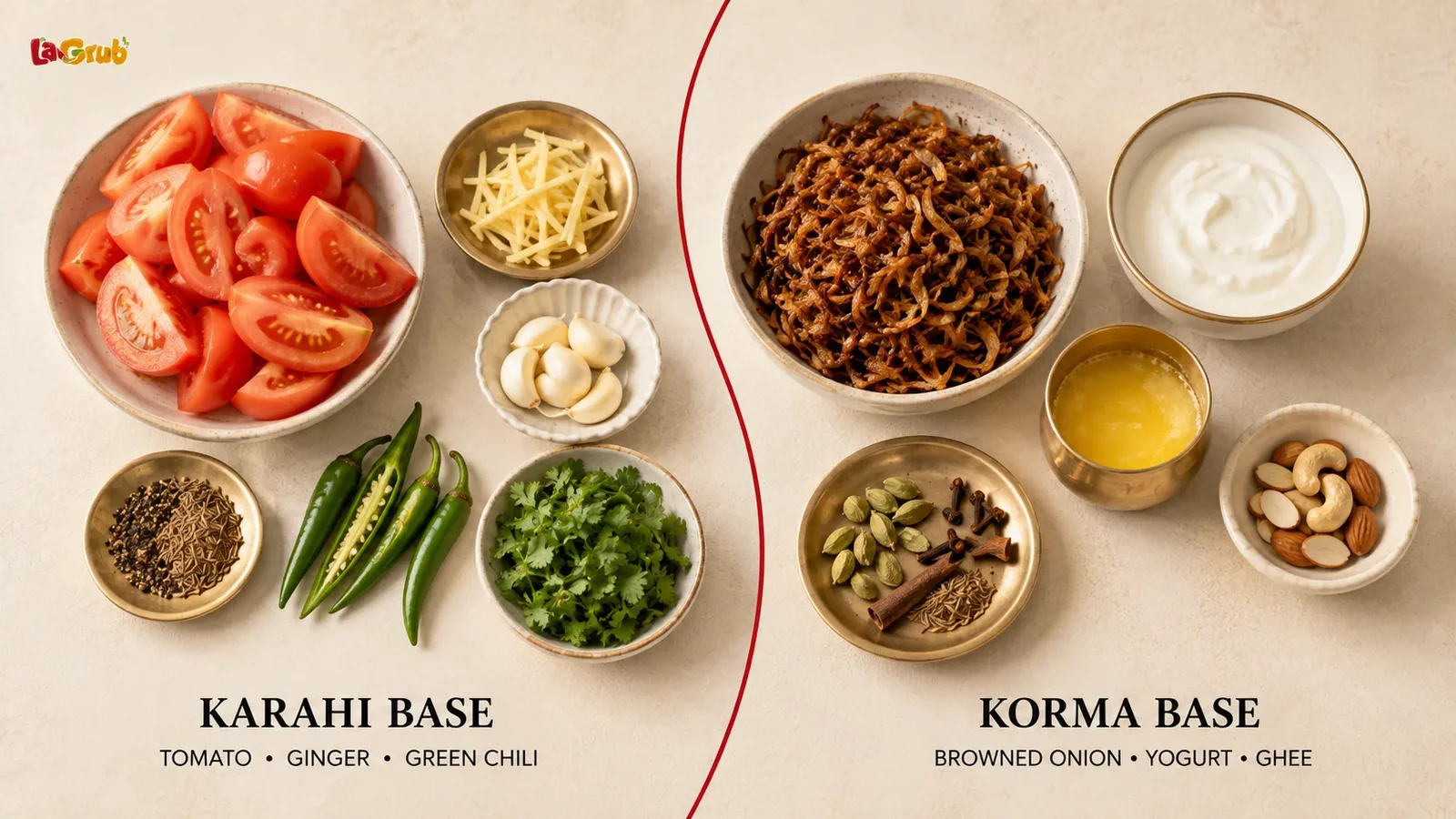
The main difference between karahi and korma comes from gravy base and cooking style. Karahi uses tomatoes, green chilies, ginger, garlic, and high-heat cooking in a karahi pan.
Korma uses yogurt, browned onions, whole spices, ghee, nuts, cream, or a slow-cooked gravy base. Pakistani qorma often tastes deeper than mild Western restaurant korma.
Karahi usually tastes brighter because tomatoes and fresh ginger stay noticeable. Korma usually tastes richer because browned onions and dairy soften the spices.
The difference between karahi and korma becomes clear after 1 bite. Karahi tastes fresh and sharp, while korma tastes smooth and mellow.
How Does Karahi Taste Compared With Korma?
Karahi tastes spicy, tangy, and fresh; korma tastes creamy, savory, and aromatic. The difference between karahi and korma helps you choose the better dish for your mood.
Karahi gives stronger green chili heat, tomato tang, and ginger bite. Korma gives deeper spice, silkier gravy, and a richer mouthfeel.
Karahi Taste Profile
Karahi taste comes from tomatoes, green chilies, ginger, garlic, black pepper, coriander, cumin, and garam masala. The masala clings to the meat.
Chicken karahi and mutton karahi often taste lively because the cook finishes the dish with fresh ginger, coriander leaves, and slit chilies.
The difference between karahi and korma shows strongly in aroma. Karahi smells fresher because tomatoes, herbs, and ginger stay near the surface.
Korma Taste Profile
Korma taste comes from browned onions, yogurt, cardamom, cloves, cinnamon, nut paste, cream, ghee, and slow cooking. The gravy tastes rounded.
Chicken korma, mutton qorma, white korma, and Mughlai korma give different textures, but each version leans rich.
Pakistani qorma often uses browned onions and yogurt. British-style korma often tastes sweeter, creamier, and milder.
How Are Karahi and Korma Cooked Differently?
difference between karahi and korma
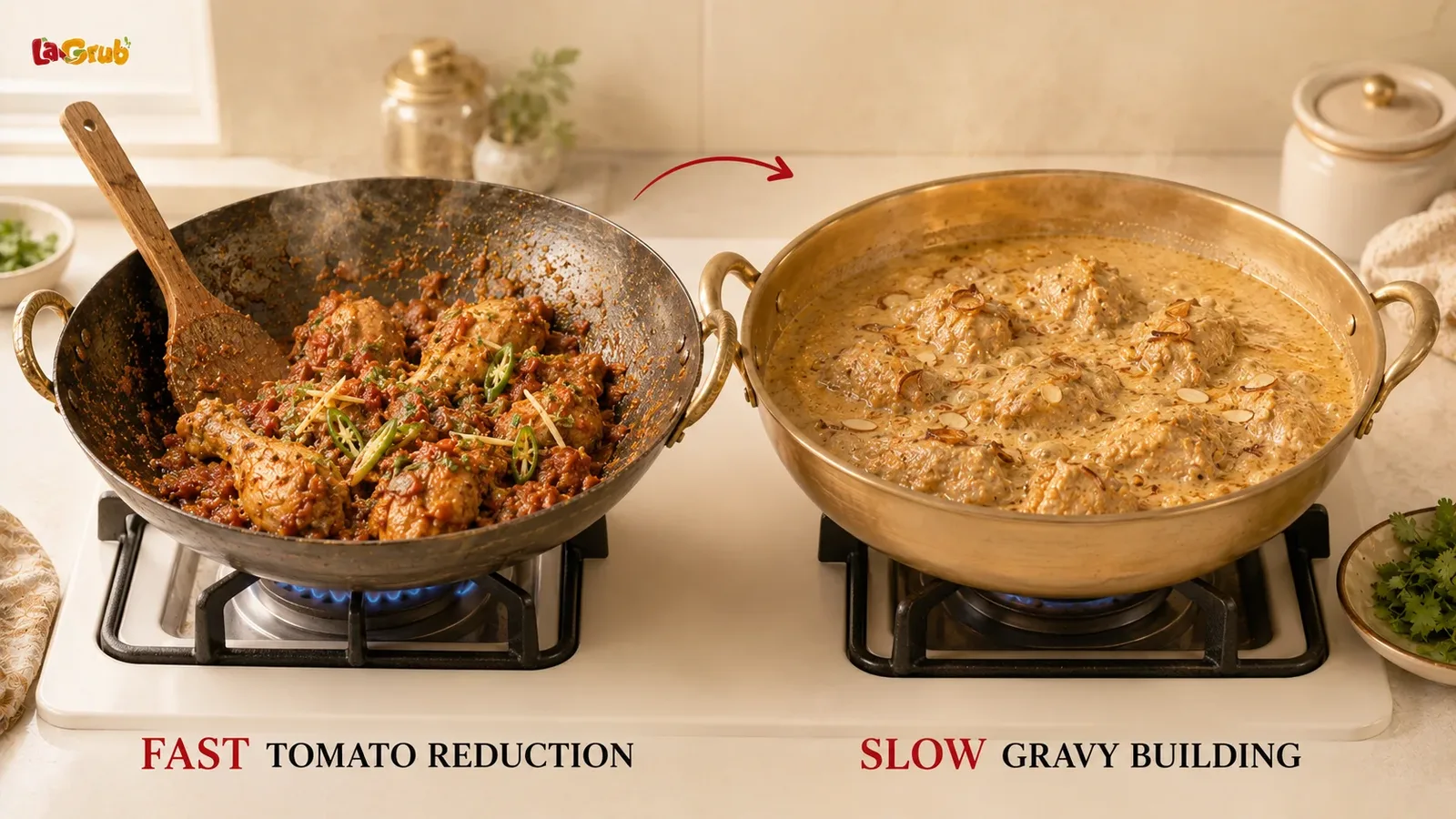
Karahi cooks faster with direct heat, while korma cooks slower with a richer gravy base. The cooking method creates the biggest difference between karahi and korma in texture.
Karahi needs active cooking because the chef reduces tomatoes into a thick masala. Korma needs slow simmering because the sauce needs depth.
Karahi Cooking Method
Karahi gets its name from the karahi pan, a deep round cooking vessel. The pan supports fast frying and quick reduction.
A cook usually heats oil or ghee, fries meat, adds ginger garlic, adds tomatoes, then reduces the masala. The dish stays chunky.
Many restaurants serve karahi in the same pan. The pan keeps the dish hot at the table for about 15 minutes.
Korma Cooking Method
Korma starts with browned onions, ghee, yogurt, whole spices, and meat. The cook simmers the sauce until the meat turns tender.
The sauce becomes smoother because onions break down into the gravy. Nuts, cream, or yogurt add thickness and richness.
The difference between karahi and korma becomes obvious during cooking. Karahi reduces tomatoes, while korma builds a slow onion-yogurt gravy.
Which Dish Is Spicier, Karahi or Korma?
Karahi usually tastes spicier than korma. Green chilies, black pepper, fresh ginger, and tomato masala give karahi a sharper heat.
Korma usually tastes milder because yogurt, cream, nuts, browned onions, and ghee soften the chili flavor. Some Pakistani qorma recipes still taste warm.
Restaurant spice levels change by kitchen. Ask for mild karahi when you want fresh flavor without strong chili heat.
Order karahi when you enjoy fresh chilies, tomato tang, and stronger ginger flavor.
Order korma when you prefer creamy sauce, gentle heat, and deeper spice aroma.
Order both dishes when you host guests with mixed spice tolerance.
The difference between karahi and korma helps non-spicy eaters avoid surprises. Korma usually feels safer for children, elders, and mild eaters.
Which Dish Has Thicker Gravy, Karahi or Korma?
difference between karahi and korma
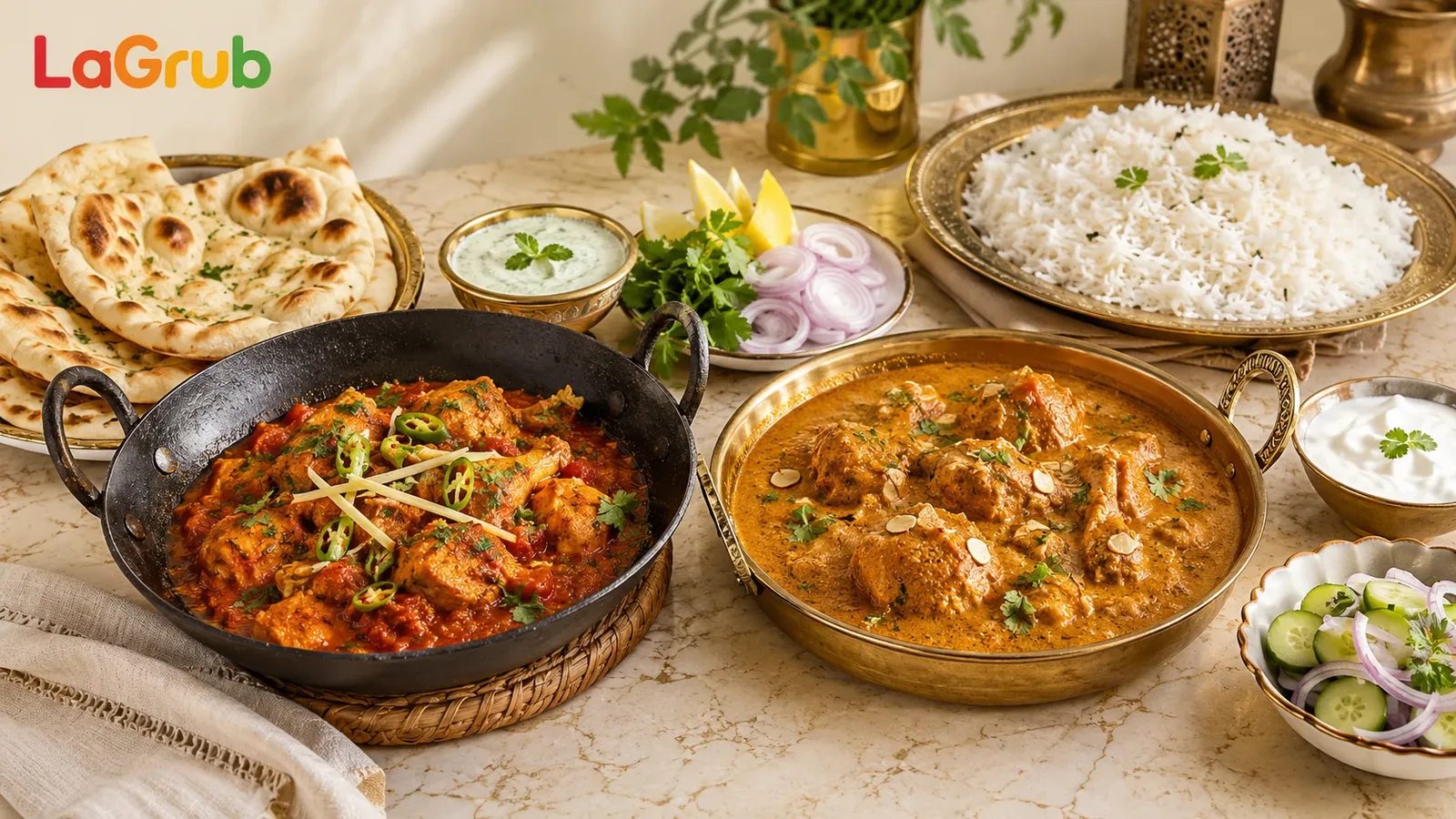
Both dishes can have thick gravy, but karahi looks chunkier and korma looks smoother. Karahi gravy clings to meat through tomato reduction.
Korma gravy feels silkier because onions, yogurt, and fat blend into a richer sauce. A good korma coats naan without turning watery.
Karahi often shows visible tomato pieces, ginger strips, green chilies, and oil around the edges. Korma often shows a glossy brown or golden sauce.
The difference between karahi and korma also appears on the plate. Karahi looks brighter red, while korma looks deeper brown, cream, or golden.
What Ingredients Make Karahi and Korma Different?
Karahi relies on fresh tomato masala, while korma relies on browned onion and dairy-based richness. Ingredient choice shapes the final difference between karahi and korma.
Both dishes can use chicken, mutton, beef, lamb, or paneer. The gravy changes the identity more than the protein.
Core Karahi Ingredients
Karahi uses meat, tomatoes, ginger, garlic, green chilies, coriander, cumin, black pepper, garam masala, salt, and fresh herbs.
Some Pakistani karahi recipes skip onions. Some restaurant karahi recipes add onions for volume and sweetness.
A common home portion uses 2 lb (900 g) chicken, 4 tomatoes, and 4 green chilies for 4 servings.
Core Korma Ingredients
Korma uses meat, yogurt, browned onions, ghee, cardamom, cloves, cinnamon, cumin, coriander, chili powder, and garam masala.
Mughlai korma can include almonds, cashews, cream, saffron, or kewra. White korma can include yogurt, cream, and white pepper.
A common home portion uses 2 lb (900 g) chicken, 1 cup (240 ml) yogurt, and 2 onions for 4 servings.
How to Choose Karahi or Korma at a Restaurant
To choose karahi or korma at a restaurant, match the dish with your spice level, sauce preference, and side dish. Karahi suits bold eaters.
Korma suits guests who want mild gravy, festive flavor, and a softer spice profile. The difference between karahi and korma makes ordering easier.
| Task | Timing | Method | Difficulty |
|---|---|---|---|
| Choose for spice tolerance | 2 minutes | Pick karahi for medium heat and korma for mild heat | Easy |
| Choose for texture | 2 minutes | Pick karahi for chunky masala and korma for smooth gravy | Easy |
| Choose for sides | 3 minutes | Pair karahi with naan and korma with rice or naan | Easy |
| Ask the server | 1 minute | Ask about chili level, cream, nuts, and tomato base | Easy |
| Order for a group | 5 minutes | Order 1 karahi, 1 korma, 1 rice, 2 naan, and raita | Medium |
Use clear restaurant wording. Say, "Is the karahi tomato-based and spicy?" Then ask, "Is the korma mild, creamy, or nut-based?"
Ask about nuts before ordering korma for guests with allergies. Almonds and cashews appear in many korma versions.
How to Serve Karahi and Korma at Home
To serve karahi and korma at home, build a balanced Desi table with bread, rice, salad, and cooling sides. The table needs contrast.
Serve karahi with naan, tandoori roti, onion rings, lemon wedges, and mint raita. The fresh sides cut the tomato masala.
Serve korma with basmati rice, naan, cucumber salad, and plain yogurt. The lighter sides balance the rich sauce.
For a guest dinner, place karahi in a 10 inch (25 cm) serving pan. Serve korma in a deep 8 inch (20 cm) bowl.
A rice side helps both dishes. LaGrub explains perfect basmati rice for fluffy grains that hold curry sauces well.
How Do Karahi, Korma, and Curry Fit Together?
Korma is a type of curry, and karahi is both a pan and a dish style. Curry works as a broad English menu word.
A restaurant can call many saucy dishes curry, including korma, karahi, bhuna, jalfrezi, madras, and tikka masala.
Karahi keeps a stronger identity because the pan, tomatoes, ginger, and chilies shape the dish. Korma keeps a richer Mughlai-style identity.
LaGrub covers wider Desi cooking methods that explain why South Asian dishes build flavor in stages.
The difference between karahi and korma also helps you understand menus outside Pakistan. Many diaspora restaurants adapt spice, cream, and sweetness.
What Visual Clues Show the Difference Between Karahi and Korma?
Karahi looks brighter, chunkier, and fresher; korma looks smoother, darker, and richer. Visual clues help you judge the difference between karahi and korma fast.
Check the color: karahi often looks red or orange, while korma often looks brown, golden, or cream.
Check the garnish: karahi often shows ginger strips, green chilies, and coriander leaves.
Check the sauce: korma often shows a smooth gravy with oil, ghee, cream, or nut paste.
Check the aroma: karahi smells fresher, while korma smells warmer and deeper.
Check the plate: karahi gravy clings to meat, while korma sauce spreads more smoothly.
The difference between karahi and korma becomes easier when you compare 2 bowls side by side. Color and texture tell you first.
Which Dish Works Better for Guests and Family Meals?
Korma usually works better for mixed guests, while karahi works better for spice lovers. Your guest list should guide your menu.
Choose korma for family dinners with children, elders, and mild eaters. Choose karahi for friends who enjoy chili, ginger, and tomato heat.
For 6 guests, order 1 karahi, 1 korma, 1 rice dish, 6 naan, 1 raita, and 1 salad.
For 10 guests, serve 2 mains, 1 rice, 10 naan, 2 salads, 2 raita bowls, and 1 dessert.
LaGrub also explains Pakistani food abroad for readers who want clearer Pakistani menu context.
Are Karahi and Korma Similar in Any Way?
Karahi and korma share protein, spices, fat, and South Asian serving habits. The dishes differ more in method than in basic pantry items.
Both dishes can use chicken, mutton, beef, lamb, paneer, or vegetables. Both dishes can use coriander, cumin, garam masala, salt, and ghee.
The difference between karahi and korma starts after the first cooking step. Karahi pushes tomatoes and fresh aromatics forward, while korma softens spice through onions and yogurt.
Both dishes taste better with proper salt balance. Low salt makes karahi taste sharp and makes korma taste flat.
Both dishes need gentle finishing. Rough stirring breaks tender meat, weakens texture, and makes the gravy look messy.
Which Dish Feels Heavier, Karahi or Korma?
Korma usually feels heavier than karahi because korma uses richer gravy. Yogurt, cream, nuts, ghee, and browned onions create a fuller sauce.
Karahi can still feel rich because restaurants use oil, ghee, and concentrated masala. A tomato-based karahi usually tastes lighter than creamy korma.
Choose karahi when you want a sharper meal with naan and salad. Choose korma when you want comfort food with rice and soft bread.
The difference between karahi and korma helps you plan portions. Serve smaller korma portions because the sauce feels richer and more filling.
A practical serving uses 6 oz (170 g) karahi per person or 5 oz (140 g) korma per person with rice.
How to Cook Karahi or Korma at Home Without Confusion
To cook karahi or korma at home without confusion, choose the flavor goal before choosing spices. Karahi needs freshness, while korma needs depth.
Start karahi with meat, tomatoes, ginger, garlic, and chilies. Start korma with browned onions, yogurt, whole spices, and ghee.
Do not cook karahi like korma. Long simmering can dull tomatoes, green chilies, and fresh ginger.
Do not cook korma like karahi. Fast tomato reduction cannot create the same browned-onion richness.
The difference between karahi and korma gives you a clean cooking path. One dish needs reduction, while the other needs slow sauce building.
Home Karahi Texture Check
Good karahi should look glossy, thick, and slightly chunky. The masala should coat meat without covering the pan in thin liquid.
Cook tomatoes until most water evaporates. Add 2 tbsp (30 ml) water only when the pan starts sticking.
Finish with ginger strips about 2 inches (5 cm) long, chopped coriander, and sliced green chilies.
Home Korma Texture Check
Good korma should look smooth, rich, and spoon-coating. The gravy should cling to naan and rice without separating into watery layers.
Brown onions slowly until deep golden, not dark black. Burnt onions make korma taste bitter and harsh.
Whisk 1 cup (240 ml) yogurt before adding yogurt to the pot. Smooth yogurt helps the sauce stay even.
How to Explain the Difference Between Karahi and Korma to Guests
To explain the difference between karahi and korma to guests, use taste words before cooking words. Guests understand flavor faster.
Say karahi tastes fresh, spicy, tomato-based, and bold. Say korma tastes creamy, rich, mild, and aromatic.
For a buffet, place label cards in front of both dishes. Use 3 inch (7.5 cm) cards with simple spice notes.
Write "Karahi: tomato masala and green chili heat" on one card. Write "Korma: creamy onion-yogurt gravy" on the other card.
The difference between karahi and korma matters most when guests avoid spicy food, nuts, cream, or heavy sauces.
FAQs About Karahi vs Korma
Is karahi spicier than korma?
Yes. Karahi usually tastes spicier because green chilies, black pepper, fresh ginger, and tomato masala create sharper heat.
Is korma always mild?
No. Korma usually tastes mild, but Pakistani qorma can taste warm, rich, and spice-forward without strong chili burn.
Is karahi the same as curry?
No. Karahi names a pan and a dish style. Curry names a broad group of saucy South Asian dishes.
Can korma have nuts?
Yes. Korma can include almonds, cashews, or nut paste, especially in Mughlai and restaurant-style versions.
Should beginners order karahi or korma first?
Beginners should order korma first for a milder dish. Beginners should order karahi next for fresher spice and tomato flavor.
Final Takeaway on Karahi and Korma
The difference between karahi and korma comes down to flavor, texture, spice, and cooking style. Karahi gives you tomato heat, fresh ginger, green chilies, and thick masala. Korma gives you creamy gravy, browned onions, yogurt, ghee, and deeper aroma. Start with korma when you want a milder meal, or choose karahi when you want bold Pakistani flavor. Visit LaGrub for more Desi food guides that make ordering and cooking easier.

Sahar Syed
Food writer for LaGrub, focused on practical Desi cooking guides, flavor education, and beginner-friendly Pakistani food content.
Get a desi recipe worth cooking, every week
One tested recipe a week. Nothing else, and unsubscribe any time.


