

An 8-ounce (237ml) cup of brewed black tea contains about 48mg of caffeine on average, though many cups fall between 40mg and 70mg.
An 8-ounce (237ml) cup of brewed black tea contains about 48mg of caffeine on average. Most homemade cups fall near 40–70mg, but leaf quantity, water temperature, steeping time, and cup size can move the number higher or lower.
That makes black tea moderately caffeinated. The same 8-ounce (237ml) serving of brewed coffee contains about 96mg, while brewed green tea contains about 29mg. Black tea usually provides roughly half the caffeine in coffee.
How Much Caffeine Is in Black Tea at a Glance?
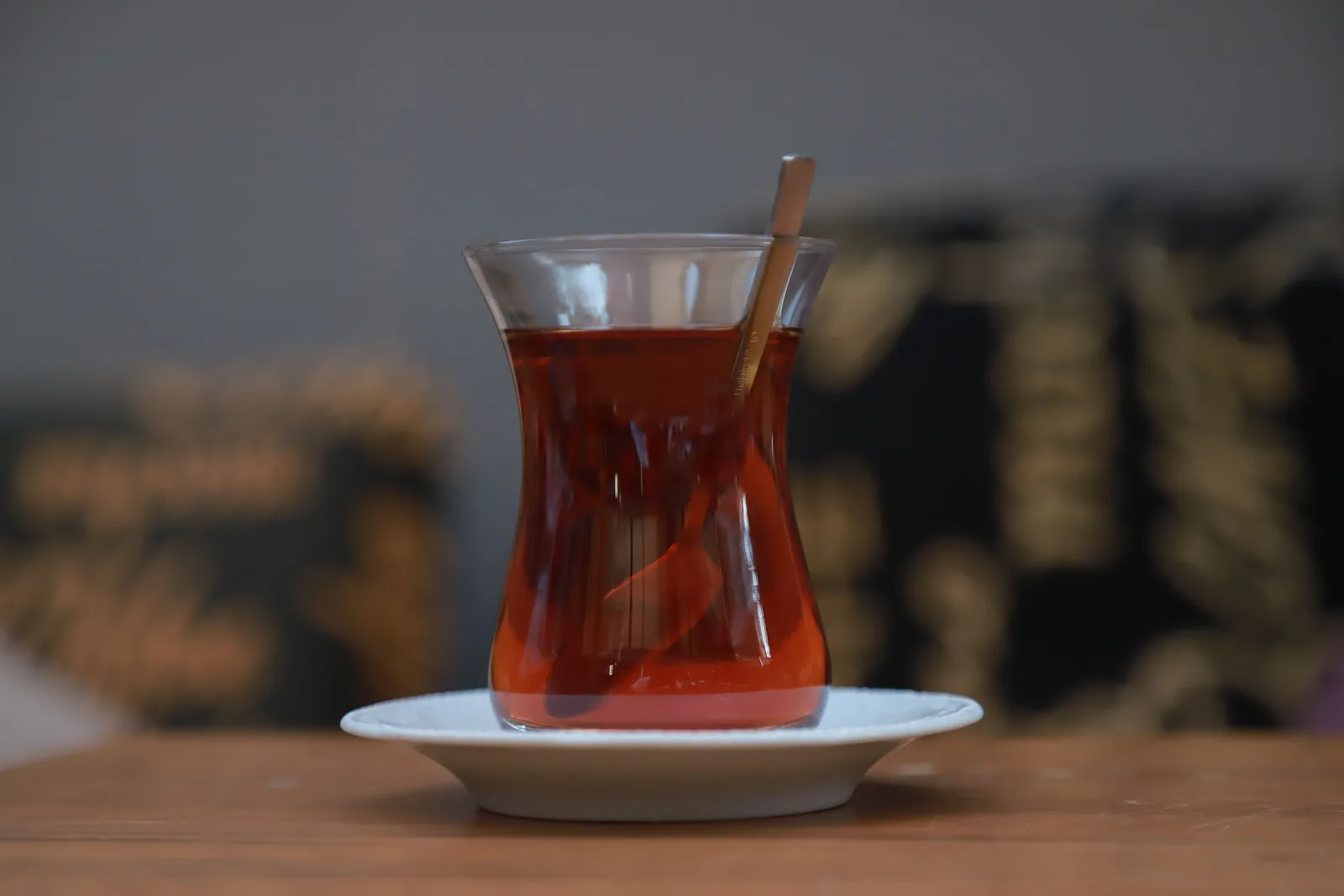 black tea
The most useful reference number is 48mg per 8-ounce (237ml) cup. Treat that number as an average, not a laboratory result for every tea bag or loose-leaf brew.
| Black tea serving | Estimated average caffeine | Practical interpretation |
|---|---|---|
| 6 ounces (177ml) | About 36mg | Small teacup |
| 8 ounces (237ml) | About 48mg | Standard reference cup |
| 10 ounces (296ml) | About 60mg | Medium household mug |
| 12 ounces (355ml) | About 71–72mg | Large mug |
| 16 ounces (473ml) | About 96mg | Travel mug |
| 24 ounces (710ml) | About 144mg | Very large tumbler |
The larger-cup estimates assume the same tea strength per fluid ounce. A 16-ounce (473ml) mug made with one weak tea bag will not necessarily contain twice the caffeine of an 8-ounce (237ml) cup.
Why Does Black Tea Caffeine Vary So Much?
Black tea caffeine varies because tea leaves are agricultural products and home brewing changes extraction. Two cups that look equally dark can contain different caffeine amounts.
Tea Quantity Changes the Total Dose
More dry tea usually gives the water access to more caffeine. One tea bag can contain a different leaf weight from another brand. A heaped spoonful of dense broken tea also weighs more than a spoonful of large whole leaves.
Use a small kitchen scale when caffeine consistency matters. Many home brewers use about 2–3g of black tea per 8 ounces (237ml) of water.
Hotter Water Extracts More Caffeine
Hot water pulls caffeine and flavor compounds from tea leaves faster. Black tea commonly uses water near 200–212°F (93–100°C), so the brewing method extracts caffeine efficiently.
Cooler water generally extracts less caffeine during the same steeping period. Cooler brewing also changes flavor, body, and aroma.
Longer Steeping Raises Caffeine Extraction
A 5-minute steep usually extracts more caffeine than a 1-minute steep from the same leaves. Longer brewing also releases more tannins and can make black tea taste dry or bitter.
Do not over-steep solely to chase caffeine. Use a little more tea and a normal 3–5 minute steep for a stronger cup with better flavor.
Broken Leaves Extract Faster
Tea bags often contain small leaf particles called fannings or dust. Smaller particles expose more surface area to water and release compounds quickly.
Large whole leaves can extract more slowly during a short infusion. A long whole-leaf steep can still produce substantial caffeine.
Plant Variety and Harvest Matter
Tea cultivar, growing climate, leaf age, harvest season, and plucking standard affect caffeine inside the dry leaf. Younger buds often contain more caffeine than older leaves from the same plant.
Processing labels alone cannot predict one exact result. Black, green, white, and oolong tea ranges overlap because the original leaf and brewing method both matter.
How Much Caffeine in Black Tea Compared with Coffee?
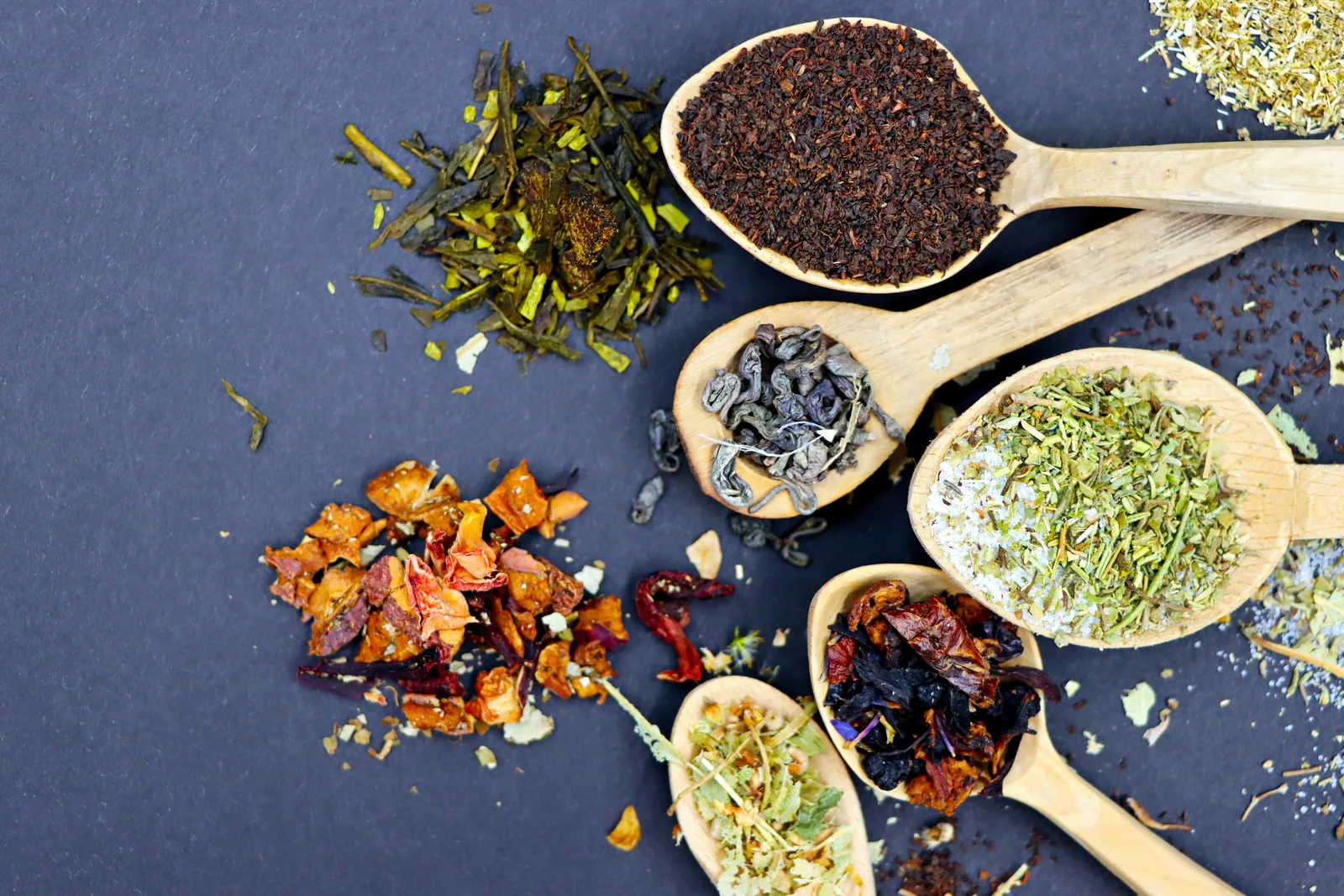 caffeine in black tea
Black tea usually contains about half as much caffeine as brewed coffee in the same cup size. Mayo Clinic lists about 48mg for 8 ounces (237ml) of brewed black tea and 96mg for brewed coffee.
| Drink | Serving size | Typical caffeine |
|---|---|---|
| Brewed black tea | 8 ounces (237ml) | About 48mg |
| Brewed coffee | 8 ounces (237ml) | About 96mg |
| Instant coffee | 8 ounces (237ml) | About 62mg |
| Espresso | 1 ounce (30ml) | About 63mg |
| Brewed green tea | 8 ounces (237ml) | About 29mg |
| Decaf black tea | 8 ounces (237ml) | About 2mg |
| Bottled black tea | 8 ounces (237ml) | About 26mg |
Serving size changes the comparison. A 16-ounce (473ml) strong black tea can contain caffeine similar to an 8-ounce (237ml) coffee. A large café coffee can contain far more than a small home-brewed tea.
Can Black Tea Replace Morning Coffee?
Yes, black tea can replace coffee when you want a smaller caffeine dose. One standard cup will not deliver the same average dose as one equal-sized brewed coffee.
Reddit users often ask whether English Breakfast tea can prevent the tiredness or headache they notice after skipping coffee. Black tea provides meaningful caffeine, but a person accustomed to 100–200mg each morning can notice the reduction.
Use measured servings instead of guessing. Two standard 8-ounce (237ml) cups of black tea average about 96mg total, which roughly matches one 8-ounce (237ml) brewed coffee. Individual products and brewing methods still change the result.
Do not abruptly change a high daily caffeine intake when withdrawal symptoms concern you. A healthcare professional can help with persistent headaches, severe fatigue, pregnancy, heart conditions, anxiety, medication interactions, or other personal risks.
Which Black Tea Has the Most Caffeine?
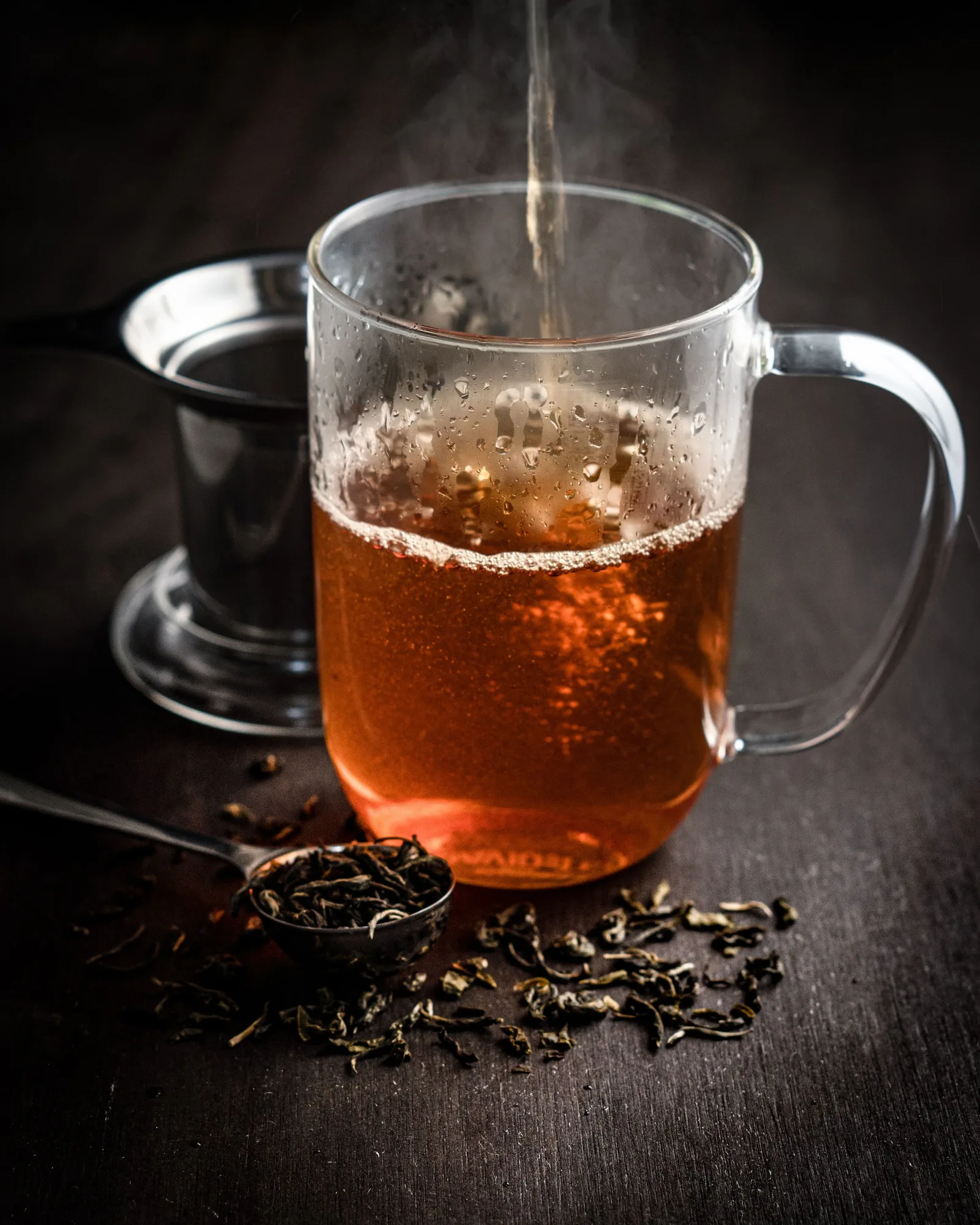 caffeine in black tea
No black tea style guarantees the highest caffeine without laboratory testing. Assam, English Breakfast, Irish Breakfast, Earl Grey, Ceylon, Darjeeling, and Kenyan black tea can all vary by brand and brew.
Assam and Breakfast Blends
Assam and breakfast blends often make strong morning cups because producers commonly use bold leaves or broken particles. Strong flavor does not prove an exact caffeine number.
English Breakfast can contain Assam, Ceylon, Kenyan, Chinese, or mixed black teas. Irish Breakfast often emphasizes Assam, but recipes differ between companies.
Earl Grey
Earl Grey is black tea scented with bergamot. Bergamot changes aroma, not the basic caffeine rule. The amount depends mainly on the tea base, leaf weight, and brewing method.
Darjeeling and Whole-Leaf Tea
Darjeeling can taste lighter than Assam, but a light taste does not guarantee low caffeine. Whole-leaf Darjeeling brewed with more leaves or longer time can exceed a weak breakfast tea.
Masala Chai
Masala chai combines black tea with spices, water, milk, and sugar. The caffeine comes from the quantity of black tea, not ginger, cardamom, cinnamon, or cloves.
A chai recipe using 2 tea bags for 2 servings can provide roughly one tea bag’s caffeine per serving. Milk changes concentration and cup volume but does not remove caffeine. Use LaGrub’s masala chai recipe to see a practical 2-serving method.
Does Tea-Bag Black Tea Have More Caffeine Than Loose Leaf?
Tea bags can extract caffeine faster, but loose leaf does not always contain less caffeine. The answer depends on particle size, dry leaf weight, and brewing time.
A recent laboratory study found more caffeine in the tested cup-sized black tea bags than in the tested loose-leaf samples. That result applies to those tested products and brewing conditions, not every tea bag sold worldwide.
Fine particles inside tea bags expose more leaf surface to water. Loose leaf can match or exceed the dose when you use more grams or brew for longer.
How Do You Make Black Tea Higher in Caffeine?
Use more tea, hot water, and a full steep to increase caffeine extraction. Keep flavor quality in mind.
- Use 2 tea bags instead of 1 for the same 8–12 ounces (237–355ml) of water.
- Use 3–4g of loose black tea instead of 2g.
- Heat water to about 200–212°F (93–100°C).
- Steep for 4–5 minutes.
- Choose fresh tea with enough leaf weight per serving.
Adding milk does not destroy caffeine. Adding water after brewing lowers caffeine concentration per sip but does not change the total caffeine already extracted.
How Do You Reduce Caffeine in Black Tea?
Use less tea, a shorter steep, or commercially decaffeinated black tea. Herbal infusions provide the clearest caffeine-free option.
- Use 1 tea bag in a larger 10–12 ounce (296–355ml) mug.
- Steep for 1–2 minutes instead of 4–5 minutes.
- Use slightly cooler water when the flavor remains acceptable.
- Choose decaf black tea for about 2mg per 8 ounces (237ml) on average.
- Choose rooibos, peppermint, or chamomile for naturally caffeine-free drinks.
A quick 30-second rinse does not reliably turn regular tea into decaf. The rinse removes only part of the caffeine and also removes flavor compounds. Buy labeled decaf tea when accurate caffeine reduction matters.
How Much Caffeine Is in Decaf Black Tea?
Decaf black tea contains about 2mg per 8-ounce (237ml) cup on average. Decaf means most caffeine has been removed; decaf does not always mean zero caffeine.
People with strong caffeine sensitivity should check the package and contact the manufacturer when exact amounts matter. Naturally caffeine-free herbal drinks differ from decaffeinated true tea.
Does Milk or Sugar Change Black Tea Caffeine?
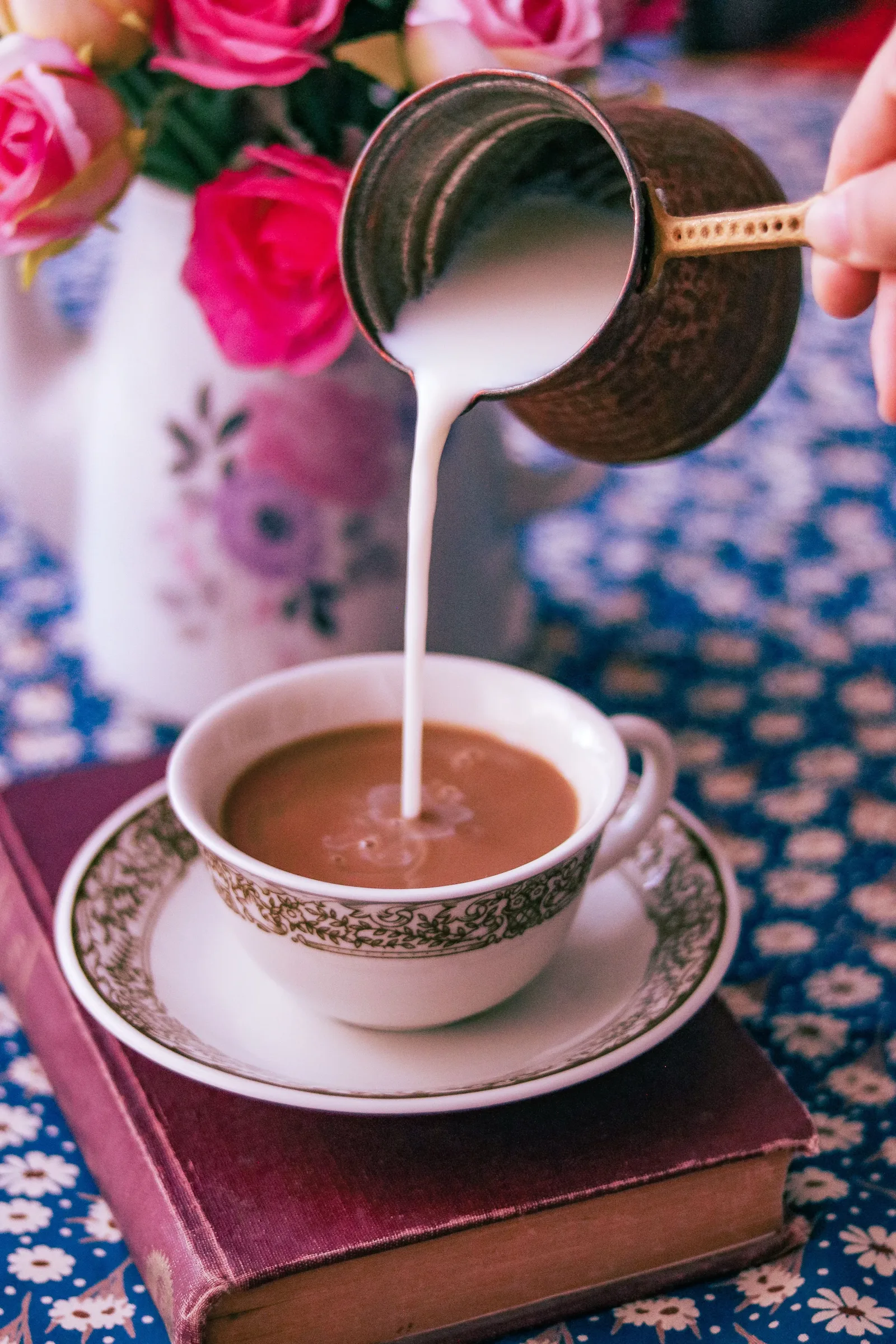 milk caffeinated tea
Milk and sugar do not remove caffeine from brewed black tea. Milk increases drink volume, while sugar changes sweetness and calories.
A cup containing 48mg still contains about 48mg after you add milk. The caffeine concentration per fluid ounce drops because the drink becomes larger.
Spices also do not add caffeine unless the blend includes another caffeinated ingredient. LaGrub’s guide to Pakistani chai culture explains why milk tea remains an important daily ritual across diaspora communities.
How Much Black Tea Is Too Much?
The United States Food and Drug Administration cites 400mg per day as an amount not generally associated with negative effects for most adults. Personal limits can be much lower.
At the 48mg average, 400mg equals about 8 standard 8-ounce (237ml) cups. Real cups vary, so 8 strong mugs can exceed that total.
Count every caffeine source, including coffee, tea, cola, energy drinks, chocolate, pre-workout products, and some medicines. Signs of excessive intake can include insomnia, nervousness, shakiness, headache, or a fast heartbeat.
Pregnant people should generally keep total caffeine below 200mg per day under American College of Obstetricians and Gynecologists guidance. Ask a qualified clinician about individual limits during pregnancy, breastfeeding, childhood, heart disease, or medication use.
Can You Estimate Caffeine from the Tea Label?
You can estimate caffeine only when the manufacturer publishes tested data. Many plain tea packages list ingredients and brewing instructions without a caffeine number.
Use the package’s serving weight, number of tea bags, and recommended steep time to compare products. A “strong,” “breakfast,” or “bold” label describes flavor and marketing, not a guaranteed caffeine dose.
Contact the brand for batch-tested information when exact dosing matters. Laboratory analysis remains the only reliable way to know the exact caffeine in one specific prepared cup.
Common Black Tea Caffeine Myths
Myth 1: Darker Tea Always Has More Caffeine
Color cannot measure caffeine. Leaf pigments, oxidation, roast, brew strength, milk, and cup shape all change appearance.
Myth 2: Black Tea Always Has More Caffeine Than Every Green or White Tea
Average category values differ, but individual cups overlap. Bud-heavy tea, matcha, high leaf ratios, and long hot steeps can change the ranking.
Myth 3: A 30-Second Rinse Makes Tea Decaf
A brief rinse does not remove most caffeine. Commercial decaffeination uses controlled processing that home rinsing cannot reproduce.
Myth 4: Milk Neutralizes Caffeine
Milk dilutes the drink but does not eliminate caffeine. Total caffeine stays nearly the same after milk enters the cup.
Myth 5: Strong Taste Proves High Caffeine
Bitterness and strength do not provide a caffeine test. Tannins, roast, spices, bergamot, and steeping errors also affect flavor.
Frequently Asked Questions
How much caffeine is in one cup of black tea?
An 8-ounce (237ml) cup contains about 48mg on average. Many cups fall within a broader 40–70mg range.
How much caffeine is in a 12-ounce black tea?
A 12-ounce (355ml) serving contains about 71–72mg at average strength. Tea quantity and brewing conditions can change the result.
Does black tea have more caffeine than coffee?
No. Brewed coffee averages about 96mg per 8 ounces (237ml), while black tea averages about 48mg.
Does black tea have more caffeine than green tea?
Usually, based on average brewed values. Black tea averages about 48mg, while green tea averages about 29mg per 8 ounces (237ml).
Can black tea keep you awake?
Yes. Black tea contains enough caffeine to disrupt sleep in sensitive people, especially when consumed later in the day.
Is English Breakfast tea high in caffeine?
English Breakfast provides moderate caffeine, but no single amount applies to every brand. Leaf weight, blend, water temperature, and steeping time control the cup.
The Bottom Line on Black Tea Caffeine
Use 48mg per 8-ounce (237ml) cup as the best everyday estimate. Expect roughly 40–70mg in many homemade servings, and adjust for cup size and brewing strength.
Black tea usually gives you less caffeine than coffee but more than average green tea. Choose more leaf and longer brewing for a stronger dose. Choose shorter steeping, decaf black tea, or herbal infusions for less caffeine.
For a broader look at tea within regional meals, read LaGrub’s guide to South Asian drink traditions. Use measured cup sizes and trusted product information whenever caffeine intake affects sleep, pregnancy, medication, or health.

Sahar Syed
Sahar Syed writes practical recipes, approachable food guides, and evidence-informed beverage articles for LaGrub.
Get a desi recipe worth cooking, every week
One tested recipe a week. Nothing else, and unsubscribe any time.


