

Wondering is Indian food good for you? It certainly can be. Indian cuisine offers lentils, beans, vegetables, yoghurt, grains, spices, and many protein-rich foods. However, the nutritional value of each meal depends on its ingredients, cooking method, portion size, and added fat, making everyday home cooking very different from some restaurant meals.
Is Indian food good for you? It certainly can be. Indian cuisine includes lentils, beans, vegetables, yoghurt, whole grains, spices, fish, and protein-rich dishes. However, nutrition depends on the recipe, cooking fat, portion size, and overall meal. Everyday Indian home cooking can also be very different from rich restaurant food.
Is Indian Food Good for You?
There is no honest way to label all Indian food as healthy or unhealthy.
India has hundreds of regional food traditions. A bowl of sambar with vegetables and lentils is very different from a creamy restaurant curry served with butter naan. Likewise, steamed idli has little in common with a deep-fried samosa.
That is why the better question is: what is actually in your meal?
Many traditional Indian dishes contain nutrient-rich ingredients. Lentils and beans provide plant protein and fibre. Vegetables add vitamins, minerals, and variety. Yoghurt can add protein and calcium. Meat, fish, eggs, and paneer can provide additional protein.
At the same time, some meals can contain large amounts of cooking fat, cream, refined carbohydrates, salt, or sugar.
The cuisine itself is not the problem or the solution. Ingredients, portions, cooking methods, and meal balance matter much more.
Why Is Indian Food Considered Unhealthy?
The reputation often comes from a limited picture of Indian cuisine.
Outside India, many people's first experience is restaurant or takeaway food. That can mean butter chicken, naan, biryani, samosas, pakoras, creamy paneer dishes, and rich desserts.
Those foods are part of Indian food culture, but they do not represent every Indian meal.
Restaurants often want dishes to taste rich and memorable. More butter, cream, ghee, oil, salt, or sugar can help create that immediate impact.
Large portions can add to the problem.
Someone may order curry and assume the curry is the entire meal. In reality, they may also eat naan, rice, fried starters, chutneys, a sweet drink, and dessert.
The nutritional picture changes when the whole meal is considered.
So, is Indian food good for you if you eat it regularly? It can be, but everyday choices usually matter more than occasional restaurant favourites.
Homemade Indian Food vs Restaurant Indian Food
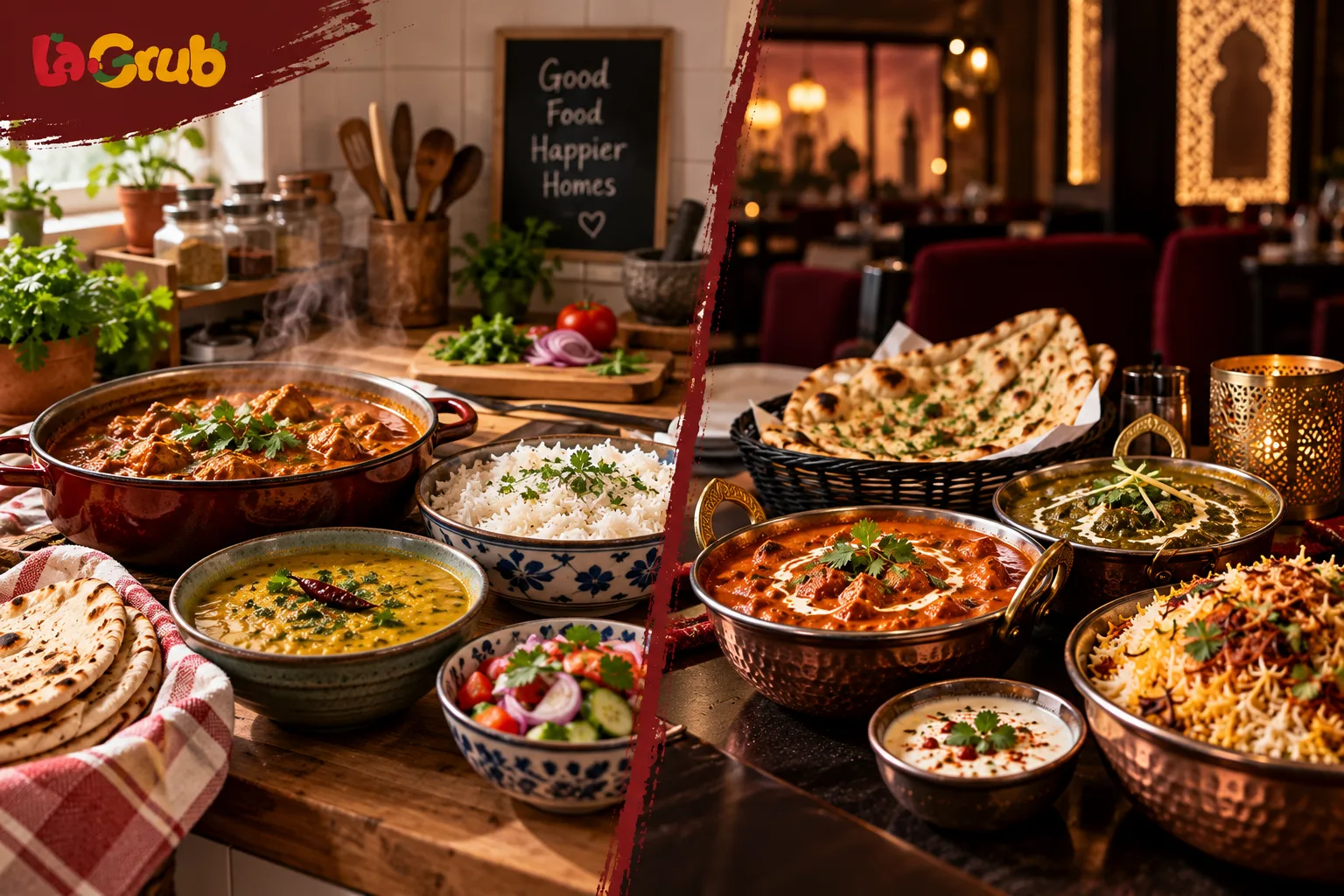
One of the most important distinctions is homemade Indian food vs restaurant Indian food.
Home cooking is often designed for daily life.
A family may eat daal, sabzi, roti, rice, yoghurt, sambar, beans, fish, chicken, or other simple foods depending on their region and preferences.
These meals can be adjusted easily. A home cook controls how much oil goes into the pan, how much salt is added, how large the portions are, and whether vegetables make up a significant part of the meal.
Restaurant cooking has different goals.
Flavour, appearance, texture, consistency, and customer expectations can encourage richer preparation.
This does not mean restaurant Indian food is automatically unhealthy or home cooking is automatically healthy. A home meal can still be high in oil, salt, sugar, or refined carbohydrates.
However, cooking at home gives you greater control.
LaGrub's guide to Desi vs Western Cooking explores how ingredients, cooking techniques, and meal structures shape the way Desi food is prepared.
What Makes Indian Food Good for You?
Indian cuisine has an enormous ingredient range.
A balanced Indian meal can combine carbohydrates, protein, vegetables, healthy sources of fat, herbs, spices, and fermented or dairy foods.
Some useful building blocks include:
Lentils and legumes: daal, chickpeas, kidney beans, black gram, peas, and other pulses can provide fibre and plant protein.
Vegetables: spinach, okra, aubergine, cauliflower, peas, carrots, cabbage, tomatoes, and many seasonal vegetables add variety.
Protein foods: lentils, beans, paneer, yoghurt, eggs, chicken, fish, and meat can contribute protein.
Whole grains: whole-wheat roti and regional grains can add fibre depending on preparation.
Herbs and spices: cumin, coriander, turmeric, ginger, garlic, fenugreek, mustard seeds, curry leaves, and other seasonings create flavour without depending only on sugar or heavy sauces.
Fermented foods: foods such as idli, dosa batter, yoghurt, and some regional preparations add another dimension to Indian diets.
The important word is balance.
Eating one nutritious ingredient does not automatically make the whole plate balanced.
Is Indian Food Too High in Carbs?
Indian meals can become carbohydrate-heavy, but this depends on what you choose.
Rice, roti, naan, dosa, idli, potatoes, puri, bhatura, and other starch-rich foods are common across different regional cuisines.
Carbohydrates themselves are not automatically a problem. They are an important energy source.
The issue is balance.
Imagine one meal with a large plate of rice, two pieces of naan, potatoes, a small portion of curry, and a sugary drink.
Now compare it with a moderate serving of rice or roti, daal, vegetables, yoghurt, and a clear protein source.
Both meals are Indian, yet their nutritional balance is very different.
If you are concerned about carbohydrate intake, look at the entire plate rather than avoiding every traditional bread or rice dish.
Is Indian Food High in Protein?
Some Indian foods are excellent protein sources, while others contain relatively little.
India's large vegetarian population has helped create an impressive range of lentil, bean, dairy, and pulse-based foods.
Daal, chana, rajma, paneer, yoghurt, and other foods can all contribute protein.
Non-vegetarian diets can also include eggs, chicken, fish, mutton, and other meats.
However, a common mistake is assuming that any meal containing daal must automatically be high in protein.
Portions matter.
If most of the plate consists of rice or bread and only a few spoonfuls of daal are eaten, the meal may still contain less protein than someone expects.
If protein is important to you, make sure it has a clear place on the plate rather than treating it as a small side.
Are Daal and Lentils Healthy?
Daal is one of the most useful foods to understand when asking is Indian food healthy.
Lentils provide plant protein and fibre and can be used in many different ways.
Masoor, moong, urad, toor, and chana daal all create different flavours and textures.
Daal can also be combined with vegetables or served alongside rice, roti, yoghurt, salad, and other foods.
Preparation still matters.
A simple lentil dish and a very rich daal finished with generous amounts of butter or cream do not have identical nutritional profiles.
That does not mean you need to remove every drop of fat.
Instead, think about how the daal fits into the entire meal.
Are Indian Vegetable Dishes Good for You?
Vegetables are a major strength of many Indian regional cuisines.
Bhindi, baingan, spinach, cauliflower, cabbage, peas, potatoes, gourds, beans, carrots, and countless other vegetables can be turned into flavourful dishes.
Spices can make vegetables more enjoyable without requiring bland preparation.
However, “vegetable” does not automatically mean light.
A vegetable dish can still contain a lot of oil, salt, cream, or other rich ingredients.
Cooking method therefore matters.
A simple sabzi prepared with moderate oil is nutritionally different from a vegetable that has been battered, deep-fried, and covered in a rich sauce.
The useful approach is not to fear Indian cooking. It is to understand how the final dish is made.
Is Ghee Healthy or Unhealthy?
Ghee often becomes the centre of debates about healthy Indian food.
It should not be treated as either a miracle food or something that must never be eaten.
Ghee is a concentrated cooking fat and contains saturated fat. It is also deeply connected with many traditional South Asian recipes.
The amount matters.
A small quantity used for flavour is different from repeatedly adding large amounts to every dish.
The rest of the diet matters too.
If a meal already contains several rich foods, extra ghee increases its overall energy and fat content. If it is used thoughtfully within an otherwise balanced eating pattern, the context is different.
Traditional ingredients can remain part of modern meals without needing exaggerated health claims.
Are Indian Spices Good for You?
Indian cooking uses an impressive range of spices.
Turmeric, cumin, coriander, ginger, garlic, black pepper, cardamom, cinnamon, fenugreek, mustard seeds, and chillies are only a few examples.
These ingredients contain various naturally occurring plant compounds and help build flavour.
However, spices should not be marketed as magic.
Adding turmeric to a curry does not automatically turn a rich meal into a nutritionally balanced one.
Their greatest everyday advantage is simpler: spices make ingredients such as lentils, beans, vegetables, fish, and meat deeply flavourful.
That can make varied home cooking easier to enjoy.
Is Indian Vegetarian Food Always Healthy?
No.
Vegetarian Indian food can be nutrient-rich, but vegetarian does not automatically mean healthy.
Consider two vegetarian meals.
One could contain daal, vegetable sabzi, whole-wheat roti, and yoghurt.
Another might include deep-fried starters, creamy paneer curry, butter naan, and a sugary dessert.
Both are vegetarian.
Their nutritional profiles are clearly different.
Vegetarian Indian cooking does offer excellent opportunities to eat more beans, lentils, vegetables, whole grains, dairy, nuts, and seeds.
The goal is to use that diversity rather than assuming every meat-free menu item is automatically the better option.
Roti vs Naan: Which Works Better for Everyday Meals?
Roti and naan are both traditional breads, but they can be prepared differently.
A simple roti is commonly made with whole-wheat atta and cooked on a tawa. It can fit easily into an everyday meal with daal, vegetables, or protein.
Restaurant naan is often made from refined flour. Depending on the recipe, it may also contain or be finished with butter or ghee.
That can make naan richer.
Still, portion size matters.
Eating several large rotis is not automatically a better choice than enjoying a moderate amount of naan.
Think about the bread as one part of the meal rather than judging it alone.
Is Biryani Healthy?
Biryani is difficult to place into a simple healthy-or-unhealthy box.
It commonly contains rice, meat or chicken, yoghurt, spices, onions, herbs, and cooking fat.
Those ingredients can form part of a normal diet.
However, biryani can also be calorie-dense, especially when prepared with generous oil or ghee and served in large portions.
The accompaniments matter as well.
A sensible serving of biryani with raita and salad creates a different meal from an oversized restaurant portion combined with fried starters, soft drinks, and dessert.
Biryani is also prepared differently across India.
Hyderabadi, Lucknowi, Kolkata, and other regional styles are not nutritionally identical.
The better approach is portion awareness rather than trying to decide whether every biryani is “good” or “bad.”
Is Indian Food Good for Weight Loss?
Indian food can fit a weight-loss diet, but the cuisine itself does not cause weight loss.
Overall energy intake, portion sizes, activity, individual needs, and long-term eating habits matter.
Indian cuisine gives you plenty of foods that can support satisfying meals.
Daal, beans, vegetables, yoghurt, grilled proteins, fish, eggs, and sensible portions of rice or roti can all be useful.
The extras can make a large difference.
Oil added during cooking counts. So do fried starters, large breads, sugary drinks, sweets, and second servings.
This does not mean you need to eat plain boiled food.
Indian spices, herbs, ginger, garlic, chilli, tamarind, lemon, and other flavour-building ingredients can make balanced meals enjoyable.
Is Indian Food Good for Your Heart?
Some Indian eating patterns can include many foods associated with a balanced diet, including vegetables, legumes, whole grains, nuts, seeds, and fish.
Other meals may contain more saturated fat, salt, refined carbohydrates, or fried foods.
Once again, Indian cuisine is too diverse for one label.
If someone wants to build more heart-conscious meals, the practical approach is to increase vegetables and legumes, choose suitable whole grains, pay attention to salt and saturated fat, and select cooking methods that do not depend heavily on frying.
Individual health needs can differ, so people managing a medical condition should follow advice from an appropriate healthcare professional.
What Are Some Nutrient-Rich Indian Foods?
You do not need unusual “superfoods” to build a balanced Indian meal.
Many familiar dishes already have useful nutritional qualities.
Daal, chana, rajma, sambar, vegetable sabzi, yoghurt, idli, grilled fish, tandoori-style proteins, and balanced roti-based meals can all provide useful nutrients depending on how they are prepared.
The key is variety.
A lentil dish provides something different from yoghurt. Vegetables offer something different from rice. Protein foods play a different role from bread.
The strongest meal often comes from combining food groups rather than searching for one perfect dish.
For more ideas on simple South Asian meals built around lentils, rice, vegetables, and protein, see LaGrub's One Pot Desi Meals for Busy Weeknights.
Which Indian Foods Are Richer Choices?
There is no reason to describe traditional foods as “bad.”
Some are simply richer and easier to enjoy less frequently or in smaller portions.
These may include:
Deep-fried foods such as samosas, pakoras, puri, and bhatura
Rich curries made with generous butter, cream, or ghee
Large portions of butter naan or other refined breads
Fried street foods and heavily loaded chaat
Syrup-heavy sweets and rich milk-based desserts
Sugary drinks and sweet lassi
Large restaurant portions that combine several rich dishes
You can still enjoy these foods.
A balanced diet has room for pleasure and celebration. Frequency and portion size are often more useful concepts than banning traditional dishes.
How to Make Indian Food Healthier Without Losing Flavour
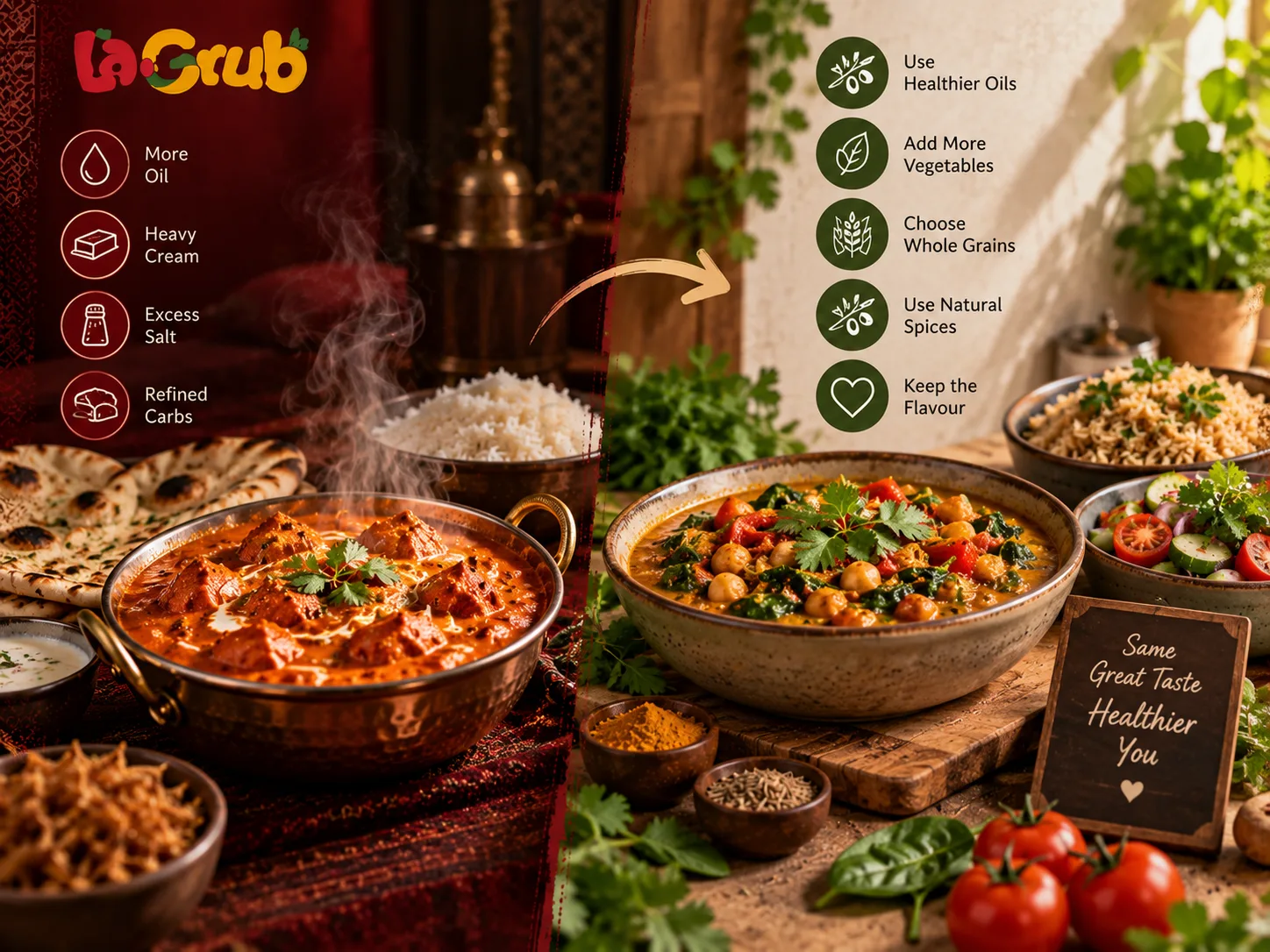
One reason Indian cooking works so well for balanced eating is that flavour does not have to come only from fat, salt, or sugar.
Spices, herbs, aromatics, acidity, roasting, grilling, and slow cooking can all build depth.
Try these practical changes:
Make vegetables, beans, and lentils regular parts of meals.
Include a clear protein source rather than relying mostly on rice or bread.
Use enough cooking fat for the recipe without automatically adding more.
Choose whole-wheat roti or other whole grains when they suit the meal.
Adjust rice and bread portions according to everything else on the plate.
Grill, bake, roast, steam, or simmer more often instead of always frying.
Use yoghurt where appropriate for creaminess and contrast.
Add flavour with ginger, garlic, herbs, spices, lemon, and tamarind.
Pay attention to salt as well as fat.
Keep rich restaurant-style dishes for occasions when you genuinely want them.
These changes do not require removing the character from traditional Indian food.
Good nutrition and good flavour do not have to compete.
How to Order Healthier Indian Food at a Restaurant
Restaurant meals require a slightly different strategy.
Start by choosing the main dish rather than ordering several extras first.
A grilled or tandoori protein, daal, vegetable dish, or chickpea-based curry can create a useful foundation.
Then decide whether you want rice or bread based on the rest of the meal. You do not always need both in large amounts.
Share starters if you want to try them without turning them into another full course.
Raita can add a cool yoghurt-based side.
You can also ask how a dish is prepared if you are unsure whether it contains a lot of cream, butter, or oil.
Most importantly, enjoy the meal.
One rich dinner does not define your overall diet any more than one bowl of daal guarantees perfect nutrition.
For a broader look at how closely related South Asian cuisines differ in ingredients and cooking traditions, explore LaGrub's Pakistani vs Indian Food Differences.
Indian Food Is More Than Restaurant Curry
It is worth remembering that India is enormous.
North Indian restaurant dishes are only one part of its food culture.
South India has extensive rice, lentil, vegetable, coconut, fermented, and seafood traditions. Coastal areas have their own fish and shellfish dishes. Different regions use millet, wheat, rice, beans, dairy, meat, vegetables, oils, and spices in different ways.
Household habits also vary by religion, region, income, season, family tradition, and personal preference.
Therefore, claims such as “Indian food is oily” or “Indian food is vegetarian” are too broad.
Some Indian dishes are oily.
Some are vegetarian.
Some are rich.
Some are light.
Some meals are mostly grains and vegetables, while others centre on meat or fish.
Understanding this diversity is essential when answering is Indian food good for you.
FAQs
Can You Eat Indian Food Every Day?
Yes, Indian food can form part of everyday eating. The key is variety and balance. Everyday meals built around vegetables, lentils, beans, protein foods, suitable grains, and sensible amounts of cooking fat are very different from eating rich takeaway dishes every day.
Is Indian Food Good for Weight Loss?
Indian food can fit a weight-loss eating plan. Daal, beans, vegetables, yoghurt, grilled proteins, and controlled portions of rice or roti can create satisfying meals. Portion size, cooking fat, snacks, drinks, and total daily intake still matter.
What Is the Healthiest Indian Food to Order?
There is no single healthiest dish. Daal, chana, rajma, vegetable dishes, sambar, tandoori-style proteins, grilled fish, yoghurt-based sides, and simple roti can be nutrient-rich choices depending on preparation and portion size.
Is Indian Food High in Carbs?
Some Indian meals can be high in carbohydrates because rice, breads, potatoes, and other starches are common. However, Indian cuisine also includes vegetables, legumes, dairy, eggs, fish, and meat. Balancing the plate is more useful than avoiding carbohydrates completely.
Is Homemade Indian Food Healthier Than Restaurant Indian Food?
It can be. Home cooking gives you more control over oil, ghee, cream, salt, sugar, ingredients, and portion sizes. Restaurant food can be richer because it is designed for flavour and indulgence. However, the actual recipe determines the nutritional value in both settings.
Conclusion
So, is Indian food good for you?
It can be very good for you, but there is no single nutritional profile for Indian cuisine.
A meal of daal, vegetables, roti, yoghurt, and a suitable protein source is completely different from a restaurant feast of creamy curry, fried starters, butter naan, rice, sugary drinks, and dessert.Both can belong to Indian food culture.The difference is how often you eat them, how they are prepared, and how much you serve.
Indian cuisine offers an enormous advantage: variety.
Lentils, chickpeas, kidney beans, vegetables, whole grains, yoghurt, fish, chicken, herbs, spices, and fermented foods give you plenty of ways to build satisfying meals.
You also do not need to abandon biryani, naan, samosas, creamy curries, or traditional sweets.
Food is more than nutrition. It is also family, celebration, culture, memory, and enjoyment.
Instead of trying to make every Indian dish “healthy,” build an overall eating pattern that leaves room for both nourishing everyday meals and richer favourites.
Explore LaGrub for more South Asian food guides, practical cooking ideas, authentic recipes, and curated cookbooks that help you enjoy traditional flavours while understanding the ingredients and techniques behind every meal.

Maimoona Ehtisham
Maimoona Ehtisham writes for LaGrub on cooking, recipes, and mindful culinary living.
Get a desi recipe worth cooking, every week
One tested recipe a week. Nothing else, and unsubscribe any time.


